KMF Automotive brake bleeding Burnaby BC trusted since 1989 Brake bleeding removes air from your hydraulic brake lines and replaces old or contaminated brake fluid with fresh fluid. A spongy or soft brake pedal is the most common sign your brakes need bleeding. KMF Automotive in Burnaby has been performing proper brake bleeds since 1989. If your pedal does not feel firm and responsive, call 604-438-0222 and book at 7080 Macpherson Ave today.
What is brake bleeding?
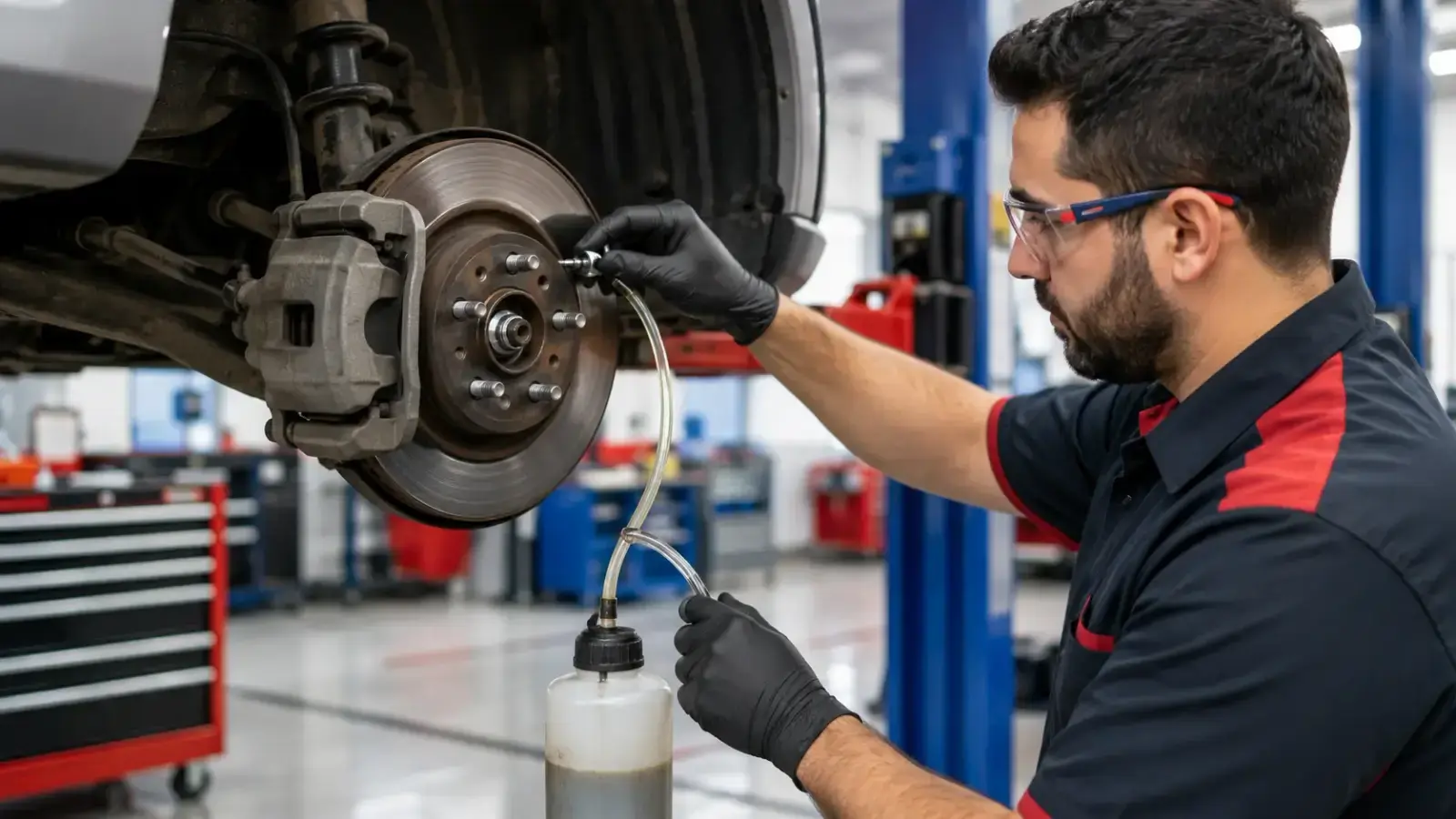
Brake bleeding is the process of purging air bubbles and old fluid from your vehicle’s hydraulic brake lines and replacing it with fresh brake fluid. Your braking system relies entirely on hydraulic pressure to work. Brake fluid does not compress. Air does. When air enters the brake lines, pressing the pedal compresses the air instead of generating the hydraulic force needed to push the calipers. The result is a soft, spongy, or unresponsive pedal.
Brake bleeding restores the solid, firm pedal feel that a properly functioning hydraulic system produces. It is a necessary part of brake maintenance after any work that opens the brake hydraulic system, and it is also required when brake fluid has become contaminated or has absorbed enough moisture to warrant full replacement.
At KMF Automotive in Burnaby, brake bleeding is part of every complete brake service that involves the hydraulic system. A thorough brake inspection in Burnaby always checks fluid condition so you know whether a bleed is needed before any work begins.
How does brake bleeding work?
Brake bleeding at KMF Automotive follows a precise, methodical process to ensure every drop of old or contaminated fluid is removed and the system is completely free of air before the vehicle is returned.
Pre-service inspection
- The brake fluid reservoir is inspected for fluid level and colour. Dark, discoloured fluid is a clear sign a full flush and bleed is overdue.
- The brake pedal is pumped to assess feel. A spongy or low pedal with no firm stopping point confirms air is present in the hydraulic system.
- Brake fluid is tested for moisture content. Moisture absorbed into the fluid lowers its boiling point and can cause brake fade under heavy use.
- The full brake system is inspected alongside the fluid assessment including pads, rotors, and calipers, so any additional concerns are identified before the bleed begins.
- The correct brake fluid specification for your vehicle is confirmed before any fluid is introduced.
During the brake bleed
- Fresh brake fluid is added to the reservoir to maintain level throughout the bleeding process.
- Starting at the wheel furthest from the master cylinder, typically the rear passenger side, the bleeder valve is carefully opened.
- Brake fluid and any air bubbles present in that section of line are pushed through the open valve and collected.
- The bleeder valve is closed and the process moves to the next wheel in the correct bleeding sequence.
- Each corner is bled in sequence until the fluid running from each bleeder valve is clean, clear, and completely free of air bubbles.
- The reservoir is topped to the correct level with fresh fluid and sealed.
- All bleeder valves are torqued correctly to prevent air from re-entering the system after the service.
Post-service confirmation
- The brake pedal is tested for firmness and correct feel. A properly bled brake system produces a firm, high pedal with no sponginess and no travel to the floor.
- The system is checked for leaks at every bleeder valve and around the reservoir cap.
- A road test confirms the pedal response is correct and braking feels solid, even, and predictable before the vehicle is returned.
- A written service record confirms the fluid specification used, the date of service, and the condition of the broader brake system at the time of the bleed.
Why does brake bleeding matter?
Because the hydraulic system is what connects your foot to your brakes. If that system has air in it, your brakes cannot perform reliably regardless of how good your pads and rotors are.
A spongy brake pedal is not just inconvenient. It means the hydraulic pressure your foot is generating is being partially lost to air compression rather than fully transferred to the calipers. In an emergency braking situation that pressure loss translates directly into longer stopping distances at exactly the moment when stopping distance matters most.
Beyond air, brake fluid that has absorbed moisture over time develops a lower boiling point. Under heavy braking conditions such as coming down a long hill in Burnaby with a full load, overheated fluid can vapourise inside the lines. Vapour compresses just like air. The pedal goes soft or to the floor. This is brake fade and it is a genuine safety emergency.
KMF Automotive was founded in 1989 by Khosro Khandashti to give Burnaby drivers honest, complete brake repair and maintenance in Burnaby at fair prices. A proper brake bleed is one of the most important services in the shop for keeping the hydraulic system performing exactly as it should.
Who needs brake bleeding and when?
Brake bleeding is needed in specific situations that are straightforward to identify. Here is the complete list of when to book.
- Your brake pedal feels soft, spongy, or mushy when you press it. This is the primary symptom of air in the brake lines and the clearest sign a bleed is needed.
- The pedal sinks gradually toward the floor when held under constant pressure. This indicates a hydraulic issue that a bleed combined with a full system inspection will identify.
- You have recently had brake work done that involved opening the hydraulic system such as caliper replacement, brake line repair, or master cylinder replacement. Any time the system is opened, a bleed is required.
- Your brake fluid has not been replaced in more than two years. A full flush and bleed should be done on a two year cycle as standard maintenance.
- The brake fluid in the reservoir appears dark brown or black. Contaminated fluid needs to be fully removed from the system through a complete flush and bleed.
- You have experienced brake fade, where the pedal went soft or became less effective during extended heavy braking.
- You have a new vehicle with no documented brake fluid or bleed history.
- You notice a burning smell after extended braking on hills. This can indicate fluid reaching or exceeding its thermal limit.
Burnaby drivers who navigate hilly routes and heavy stop and go traffic put their brake fluid through more heat cycles than highway drivers. This accelerates moisture absorption and brings the fluid replacement and bleed interval forward. Book your brake bleeding service in Burnaby at KMF Automotive before degraded fluid becomes a brake fade situation.
Common myths about brake bleeding
Myth 1: “Topping up the brake fluid reservoir is the same as a brake bleed.” Topping up adds fresh fluid on top of old contaminated fluid sitting in the reservoir. It does nothing to remove the degraded fluid from the brake lines, calipers, and master cylinder throughout the system. A proper brake bleed cycles fresh fluid through every section of the hydraulic circuit and purges every air bubble and contaminant in the process.
Myth 2: “If the pedal feels fine, the brakes do not need bleeding.” Pedal feel can mask gradual hydraulic degradation. Moisture contamination builds slowly over months and years. A pedal that feels acceptable today may have significantly degraded fluid that is already approaching its moisture saturation limit and becoming unreliable under heat. A fluid moisture test during an inspection tells you the real condition regardless of pedal feel.
Myth 3: “Brake bleeding is only needed after brake work.” Brake bleeding after any work that opens the hydraulic system is mandatory. But it is also needed as part of regular maintenance on a two year cycle to replace fluid that has absorbed moisture during normal operation. Even a perfectly sealed brake system allows moisture into the fluid over time through microscopic pathways in rubber components.
Myth 4: “One corner is enough, I do not need to bleed all four.” Air in a brake system does not stay in one location. Hydraulic pressure cycles move fluid and air through the interconnected lines. A complete brake bleed works through every corner of the system in the correct sequence to ensure no air remains anywhere in the hydraulic circuit. Bleeding only one corner leaves the rest of the system untouched.
Myth 5: “Brake bleeding is a simple job I can do at home.” A basic bleed with a helper pumping the pedal is technically possible at home. But a proper pressure bleed, moisture content testing, correct bleeding sequence, correct torque on bleeder valves, and confirmation of pedal firmness require equipment and experience to do correctly. An incomplete bleed at home leaves air in the system and gives false confidence in a brake system that is still compromised.
Services We Offer
KMF Automotive is a full service auto repair shop in Burnaby. The team at 7080 Macpherson Ave handles everything your vehicle needs to stay safe and running properly.
| Service | Description | Best Use Case | Book Now |
|---|---|---|---|
| Brake Inspection | A thorough examination of the entire brake system including pads, rotors, shoes, fluid levels, and all components. Recommended regularly to ensure vehicle and passenger safety. | Annual maintenance, pre-purchase checks, or any time braking feels off. | Brake inspection Burnaby |
| Brake Pad Replacement | Removal of worn friction pads and installation of new pads on front, rear, or all four corners. Pads must be replaced when worn below safe thickness. | Squealing brakes, reduced stopping power, or scheduled maintenance. | Brake pad service Burnaby |
| Brake Rotor Service | Resurfacing or full replacement of brake rotors that have become worn, scored, or warped over time. | Pulsation through the pedal, vibration when braking, or grooved rotor surfaces. | Rotor repair Burnaby |
| Hydraulic Brake Fluid | Removal of contaminated brake fluid and replacement with fresh fluid to restore proper hydraulic braking performance. | Soft or spongy pedal, discoloured fluid, or every two years as preventive maintenance. | Brake fluid flush Burnaby |
| Brake Shoes | Replacement of worn brake shoes in drum brake systems that press against the drum to slow or stop the vehicle. | Rear drum brake vehicles with reduced stopping power or grinding from the rear. | Brake shoe service Burnaby |
| Electronic ABS Sensors | Inspection and replacement of sensors that monitor wheel speed and activate the anti-lock braking system when needed. | ABS warning light, ABS not engaging correctly, or sensor fault codes present. | ABS sensor service Burnaby |
| Power Brake Booster | Diagnosis and replacement of the booster that amplifies pedal force to make braking easier and more responsive. | Hard or stiff brake pedal, or noticeably increased effort required to brake. | Brake booster repair Burnaby |
| Wheel Alignment | Adjustment of wheel angles to manufacturer specifications to restore straight tracking, even tire wear, and proper handling. | Vehicle pulling to one side, uneven tire wear, or after hitting a curb or pothole. | Wheel alignment Burnaby |
| Exhaust and Muffler Repair | Inspection, repair, and replacement of exhaust components including mufflers, pipes, and catalytic converters. | Loud rumbling noise, exhaust smell inside the vehicle, or visible rust or damage under the car. | Exhaust repair Burnaby |
| Oil Change | Drain and replace engine oil and filter to keep your engine properly lubricated and running clean. | Every 5,000 to 8,000 km depending on oil type and vehicle, or as recommended by your manufacturer. | Oil change Burnaby |
| Tire Repair | Inspection, patching, and replacement of tires that are damaged, punctured, or worn below safe tread depth. | Flat tire, slow leak, uneven wear, or tires approaching the end of their service life. | Tire repair Burnaby |
| Timing Belt Replacement | Inspection and replacement of the timing belt that synchronises your engine camshaft and crankshaft rotation. | Manufacturer recommended interval, usually every 100,000 to 160,000 km, or if the belt shows cracking or fraying. | Timing belt Burnaby |
| Clutch Repair | Diagnosis and repair or replacement of clutch components including the disc, pressure plate, and flywheel in manual transmission vehicles. | Slipping clutch, difficulty shifting, grinding when engaging gears, or a high clutch engagement point. | Clutch repair Burnaby |
| AC Services | Inspection, recharge, and repair of your vehicle air conditioning system to restore proper cooling performance. | Weak or warm airflow from vents, unusual smells when AC is on, or AC not engaging at all. | AC service Burnaby |
Brake Bleeding Restores Firm Pedal and Safety
Brake bleeding is one of the least visible but most important brake services your vehicle needs. A properly bled system gives you a firm, confident pedal and a brake system that performs reliably under any condition Burnaby roads throw at you. KMF Automotive at 7080 Macpherson Ave has been doing this right since 1989. If your pedal feels soft or your fluid history is uncertain, book a brake bleed today and restore full confidence in your brake system.
Book Your Brake Bleeding Service Today
KMF Automotive is open Monday to Friday, 9:00 AM to 5:00 PM. Call 604-438-0222, email [email protected], or use the contact page to book. A complete four corner brake bleed done right, with the correct fluid specification and a road test before you leave, from a Burnaby team with over 35 years of honest brake service behind them.
Contact KMF Automotive Book My Brake Bleed
Frequently Ask Questions
What is brake bleeding and why is it needed?
Brake bleeding removes air from your hydraulic brake lines and replaces old or contaminated brake fluid with fresh fluid. Air in the brake lines compresses when the pedal is pressed, reducing hydraulic pressure and producing a soft or spongy pedal. A complete bleed restores full hydraulic performance and firm pedal feel.
How do I know if my brakes need bleeding?
The most common sign is a soft, spongy, or mushy brake pedal that does not feel firm when pressed. A pedal that slowly sinks to the floor under constant pressure, a burning smell after heavy braking, or dark discoloured fluid in the reservoir are also indicators. KMF Automotive tests for all of these during every brake inspection.
How often does brake bleeding need to be done in Burnaby?
As part of a brake fluid flush, bleeding should be done every two years as standard maintenance. It is also required any time the hydraulic system is opened for repairs such as caliper replacement or brake line work. Burnaby drivers who use their brakes heavily on hills or in stop and go traffic may benefit from a shorter fluid replacement interval.
How long does a brake bleed take at KMF Automotive?
A complete four corner brake bleed typically takes less than an hour on its own. When combined with a brake fluid flush, pad replacement, or other brake services the total appointment time increases. KMF Automotive provides a clear time estimate before starting any work.
Can brake bleeding fix a soft brake pedal?
Yes, if the soft pedal is caused by air in the hydraulic lines. If the pedal softness is caused by a different issue such as a failing master cylinder, a caliper leak, or a brake line leak, those underlying problems need to be diagnosed and repaired alongside the bleed. KMF Automotive inspects the full system before and after every brake bleed to confirm the root cause is properly addressed.
Why choose KMF Automotive for brake bleeding in Burnaby?
KMF Automotive has been performing complete four corner brake bleeds in Burnaby since 1989 using the correct fluid specification, proper bleeding sequence, and pressure testing to confirm every air bubble is removed. Fair pricing, honest recommendations, and a road test before every vehicle is returned.
Key Takeaways
- Brake bleeding removes air from the hydraulic brake lines and replaces degraded fluid with fresh fluid to restore firm, reliable pedal feel.
- A spongy, soft, or gradually sinking brake pedal is the clearest sign that air is present in the hydraulic system and a bleed is needed.
- Topping up the reservoir is not a substitute for a full bleed. Only a complete four corner bleed removes air and old fluid from the entire hydraulic circuit.
- Brake bleeding is required any time the hydraulic system is opened for repairs and as part of the two year brake fluid replacement cycle.
- Moisture in brake fluid lowers its boiling point and can cause brake fade under heavy use. A bleed that replaces the fluid eliminates this risk.
- KMF Automotive has performed brake bleeding services in Burnaby since 1989 at 7080 Macpherson Ave, open Monday to Friday 9 AM to 5 PM.
- Call 604-438-0222 or email [email protected] to book your brake bleed and get a free quote today.