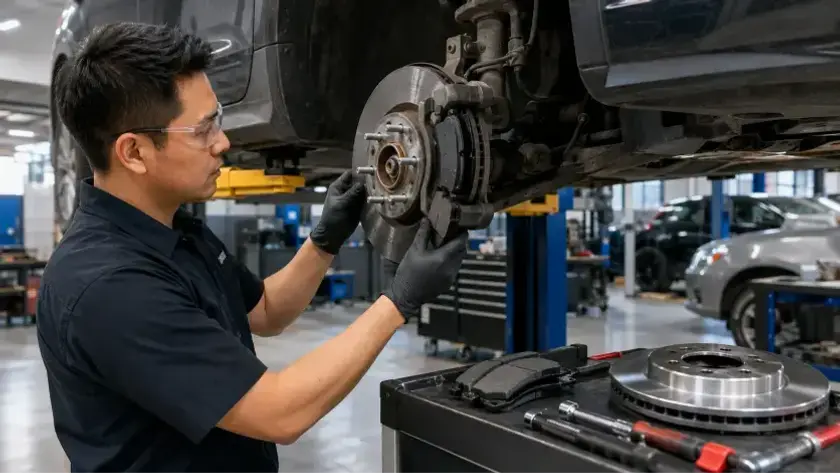
Changing brake pads is the most common brake service a car needs and one of the most affordable when done at the right time. At KMF Automotive in Burnaby, every brake pad change starts with a full system inspection and ends with a road test before you leave. Squealing, grinding, or simply overdue? Call 604-438-0222 and book at 7080 Macpherson Ave today.
What does it mean to change brake pads?
Changing brake pads means removing the worn friction material from your brake calipers and replacing it with fresh pads so your vehicle can stop safely and reliably. Brake pads press against the rotors under hydraulic pressure every time you brake. Over thousands of stops, that friction material wears away until there is not enough left to do the job properly.
A brake pad change is one of the most routine maintenance services a vehicle will ever need. Most drivers need to change brake pads every 25,000 to 65,000 kilometres depending on how and where they drive. Burnaby city driving with its frequent stops puts most drivers at the lower end of that range.
What separates a good brake pad change from a poor one is what happens around the pad swap itself. At KMF Automotive in Burnaby, changing brake pads always includes a brake inspection of the full brake system before the new pads go in. Rotors, calipers, fluid, and brake hardware are all checked so the new pads go into a system that is ready to perform.
How does changing brake pads work?
Here is the complete step-by-step process for a brake pad change at KMF Automotive, from the initial inspection through the final road confirmation.
Pre-service inspection
- Your vehicle is lifted, and all four wheels are removed to give the technician direct access to every brake assembly.
- Brake pad thickness is measured at each corner using a calibrated gauge tool. New pads start at 10 to 12mm. The wear indicator activates at 3mm. Below 2mm is the critical minimum requiring immediate replacement.
- Front and rear pads are measured and recorded separately because they wear at different rates and rarely need changing at the same time.
- Rotors are checked for surface scoring, grooves, warping, and disc thickness relative to the manufacturer’s minimum spec for safe resurfacing.
- Brake fluid is checked for colour and moisture content. Contaminated or moisture-saturated fluid needs replacement alongside the pad change.
- Caliper slide pins are tested for smooth, free movement at every corner. Sticky slide pins cause new pads to wear unevenly from day one.
- Caliper pistons are inspected for consistent extension and any sign of seal leakage.
- Every finding is communicated clearly before any work is approved.
During the brake pad change
- Worn brake pads are unbolted and removed from the caliper brackets on every corner being serviced.
- Caliper slide pins are thoroughly cleaned and relubricated. This step is not optional. It directly determines how evenly and how long the new pads will wear.
- Caliper pistons are carefully pressed back to create clearance for the new, thicker pads.
- New brake pads of the correct compound and specification for your vehicle are installed into the caliper brackets.
- Everything is torqued to manufacturer specifications at every fastener point.
- If rotors require resurfacing or replacement based on inspection findings, that work is completed before the new pads are installed.
- Brake fluid is flushed and replaced if contamination or moisture testing confirmed it is needed.
After the brake pad change
- All four wheels are reinstalled and torqued to the correct vehicle specification.
- A controlled bed-in process properly seats the new pad material against the rotor surface. Skipping this step reduces initial braking performance and can cause uneven pad deposits on the rotor.
- A road test confirms correct pedal feel, no noise, no pulling to one side, and no pulsation before the vehicle is returned.
- A complete service record is provided documenting every measurement taken, every component inspected, and every part changed.
Why does it matter who changes your brake pads?
Because a brake pad change done without attention to the surrounding system creates problems within weeks or months that send you back to a shop for work that should have been addressed the first time.
The most common example is caliper slide pin lubrication. If the slide pins are not cleaned and relubricated when brake pads are changed, the caliper does not move freely after installation. One side of the pad ends up pressing harder than the other. That pad wears out in half the time. The driver comes back wondering why their new pads are already worn and the answer is a step that was skipped to save five minutes.
The second most common example is rotor condition. New pads installed on scored, warped, or undersized rotors underperform from the first stop. Stopping distances increase. Pulsation through the pedal continues. The driver assumes the new pads are the problem when the real issue was a rotor that should have been addressed during the same service visit.
KMF Automotive was founded in 1989 by Khosro Khandashti to give Burnaby drivers a shop that changed brake pads the right way every time. That means inspection first, caliper pin service included, correct parts, and a road test after. Over 35 years that standard has never changed. That is why Burnaby drivers keep choosing KMF for brake pad service in Burnaby.
Who needs to change brake pads and when?
Here are the specific situations that mean it is time to change brake pads at KMF Automotive.
- Squealing or squeaking when you press the brake pedal. This is the wear indicator making contact with the rotor. Your pads are approaching minimum thickness. Book within the next few days.
- Grinding or a harsh metal scraping sound when braking. The pads are gone. Metal is contacting the rotor with every stop, and rotor damage is accumulating. Call KMF Automotive at 604-438-0222 today.
- A soft, spongy, or lower-than-normal brake pedal alongside worn pads. Indicates a fluid or caliper issue that needs attention at the same time as the pad change.
- Your car pulling to one side under braking. Often caused by a seized caliper slide pin causing uneven pad pressure across an axle.
- Vibration or pulsation through the brake pedal when stopping. Warped or scored rotors need to be assessed and addressed at the same time as the pad change.
- The brake warning light is on. Book a brake inspection immediately.
- You have driven 25,000 to 30,000 kilometres of Burnaby city driving since the last time you changed brake pads.
- More than two years since your last full brake system inspection, regardless of how the brakes feel.
- You have bought a used car with no documented brake service history.
Do not wait for the grinding sound. The squeal at Stage 3 is the system telling you to book. The grinding at Stage 5 is the system telling you it is already too late for the simple fix. Change brake pads when the wear indicator tells you to and keep the job straightforward. Book your brake pad change in Burnaby at KMF Automotive before the wear indicator becomes a damage indicator.
Common myths about changing brake pads
Myth 1: “Changing brake pads is a quick job any shop can do the same way.” Removing and installing pads takes similar time at every shop. The difference is in what happens alongside the swap. Cleaning and lubricating caliper slide pins, measuring rotor thickness against spec, testing fluid moisture content, and performing a proper bed-in process after installation are steps that separate a complete brake pad change from a basic one. KMF Automotive performs all of these on every job.
Myth 2: “You always need to change brake pads on all four corners at once.” Front brake pads carry roughly 70 percent of the stopping load and wear considerably faster than rear pads. Changing front pads while rear pads still have significant life remaining is the correct approach and saves money compared to replacing all four corners unnecessarily. KMF Automotive measures every corner and recommends changes only where the gauge readings confirm it is needed.
Myth 3: “Changing brake pads means new rotors are needed at the same time.” Rotors are assessed during every brake pad change at KMF Automotive. If they are within manufacturer thickness specifications and show no significant scoring or warping, the new pads go straight on without any rotor work. Rotor replacement is only recommended when inspection measurements justify it.
Myth 4: “The brake pad bed-in process is optional.” Bedding in new brake pads is not optional. It transfers an even layer of pad material to the rotor surface and ensures consistent, predictable braking from the first real stop. Skipping it causes uneven pad deposits on the rotor, which produces vibration and pulsation under braking and significantly reduces the performance and lifespan of both the pads and the rotors.
Myth 5: “Any brake pad that fits the caliper is fine.” Pad compound, friction rating, and quality vary considerably between manufacturers and product tiers. The wrong pad specification for your vehicle or your driving conditions can produce excessive noise, wear faster than expected, or generate more heat than the caliper and rotor are designed to handle. KMF Automotive uses quality pads in the correct specification for each vehicle.
Services We Offer
KMF Automotive is a full-service auto repair shop in Burnaby. The team at 7080 Macpherson Ave handles everything your vehicle needs to stay safe and running properly.
| Service | Description | Best Use Case | Book Now |
|---|---|---|---|
| Brake Inspection | A thorough examination of the entire brake system, including pads, rotors, shoes, fluid levels, and all components. Recommended regularly to ensure vehicle and passenger safety. | Annual maintenance, pre-purchase checks, or any time braking feels off. | Brake inspection Burnaby |
| Brake Pad Replacement | Removal of worn friction pads and installation of new pads on front, rear, or all four corners. Pads must be replaced when worn below safe thickness. | Squealing brakes, reduced stopping power, or scheduled maintenance. | Brake pad service Burnaby |
| Brake Rotor Service | Resurfacing or full replacement of brake rotors that have become worn, scored, or warped over time. | Pulsation through the pedal, vibration when braking, or grooved rotor surfaces. | Rotor repair Burnaby |
| Hydraulic Brake Fluid | Removal of contaminated brake fluid and replacement with fresh fluid to restore proper hydraulic braking performance. | Soft or spongy pedal, discoloured fluid, or every two years as preventive maintenance. | Brake fluid flush Burnaby |
| Brake Shoes | Replacement of worn brake shoes in drum brake systems that press against the drum to slow or stop the vehicle. | Rear drum brake vehicles with reduced stopping power or grinding from the rear. | Brake shoe service Burnaby |
| Electronic ABS Sensors | Inspection and replacement of sensors that monitor wheel speed and activate the anti-lock braking system when needed. | ABS warning light, ABS not engaging correctly, or sensor fault codes present. | ABS sensor service Burnaby |
| Power Brake Booster | Diagnosis and replacement of the booster that amplifies pedal force to make braking easier and more responsive. | Hard or stiff brake pedal, or noticeably increased effort required to brake. | Brake booster repair Burnaby |
| Wheel Alignment | Adjustment of wheel angles to manufacturer specifications to restore straight tracking, even tire wear, and proper handling. | Vehicle pulling to one side, uneven tire wear, or after hitting a curb or pothole. | Wheel alignment Burnaby |
| Exhaust and Muffler Repair | Inspection, repair, and replacement of exhaust components including mufflers, pipes, and catalytic converters. | Loud rumbling noise, exhaust smell inside the vehicle, or visible rust or damage under the car. | Exhaust Repair Burnaby |
| Oil Change | Drain and replacement of engine oil and filter to keep your engine properly lubricated and running clean. | Every 5,000 to 8,000 km depending on oil type and vehicle, or as recommended by your manufacturer. | Oil change Burnaby |
| Tire Repair | Inspection, patching, and replacement of tires that are damaged, punctured, or worn below safe tread depth. | Flat tire, slow leak, uneven wear, or tires approaching the end of their service life. | Tire repair Burnaby |
| Timing Belt Replacement | Inspection and replacement of the timing belt that synchronises your engine camshaft and crankshaft rotation. | Manufacturer-recommended interval, usually every 100,000 to 160,000 km, or if the belt shows cracking or fraying. | Timing belt Burnaby |
| Clutch Repair | Diagnosis and repair or replacement of clutch components including the disc, pressure plate, and flywheel in manual transmission vehicles. | Slipping clutch, difficulty shifting, grinding when engaging gears, or a high clutch engagement point. | Clutch repair Burnaby |
| AC Services | Inspection, recharge, and repair of your vehicle air conditioning system to restore proper cooling performance. | Weak or warm airflow from vents, unusual smells when AC is on, or AC not engaging at all. | AC service Burnaby |
Brake Pad Replacement in Burnaby Done Right Every Time
Changing brake pads in Burnaby is a simple, affordable service when it is done at the right time and done completely. At KMF Automotive, every brake pad change includes a full system inspection, caliper slide pin lubrication, a proper bed-in process, and a road test before you leave. The team at 7080 Macpherson Ave has been changing brake pads the right way since 1989. Book today and drive away knowing the job was done properly.
Book Your Brake Pad Change Today
KMF Automotive is open Monday to Friday, 9:00 AM to 5:00 PM. Call 604-438-0222, email [email protected], or use the contact page to schedule. A complete brake pad change with no shortcuts and no surprises from a Burnaby team with over 35 years behind them.
Contact KMF Automotive: Book My Brake Pad Change
Frequently Asked Questions: change brake pads
How much does it cost to change brake pads in Burnaby?
Changing brake pads is one of the most affordable brake services KMF Automotive offers. The exact cost depends on your vehicle make and model and whether rotors or other components need attention at the same time. Email [email protected] for a free quote specific to your vehicle.
How long does it take to change brake pads at KMF Automotive?
Most brake pad changes are completed in one to two hours. If rotor resurfacing or additional components are needed, the time adjusts accordingly. KMF Automotive gives you an accurate time estimate before any work begins so you can plan your visit.
How often do I need to change brake pads in Burnaby?
Most brake pads last between 25,000 and 65,000 kilometres. Burnaby city driving with frequent stops typically puts drivers at the lower end of that range. An annual brake inspection at KMF Automotive tells you exactly where your pads stand without guessing.
Do I need to change brake pads on all four wheels at once?
Not necessarily. Front and rear pads wear at different rates because front brakes do most of the stopping work. KMF Automotive measures all four corners and recommends changes only where the inspection confirms it is genuinely needed.
Does changing brake pads require changing the rotors too?
Only if the inspection confirms the rotors are scored, warped, or below minimum safe thickness. Rotors in good condition are resurfaced rather than replaced. KMF Automotive never recommends rotor work without measurement findings to support it.
Why choose KMF Automotive to change brake pads in Burnaby?
KMF Automotive has been changing brake pads in Burnaby since 1989 with the same commitment to complete inspection, correct caliper pin service, quality parts, and a road test on every job. Founded by Khosro Khandashti as a trusted alternative to dealerships, the shop has maintained fair pricing and honest recommendations at 7080 Macpherson Ave for over 35 years.
Key Takeaways: change brake pads
- Changing brake pads is the most frequently needed brake service. Most Burnaby city drivers need a pad change every 25,000 to 30,000 kilometres.
- A complete brake pad change at KMF Automotive includes caliper slide pin lubrication, rotor inspection, fluid assessment, a proper bed-in process, and a road test. These steps are not optional.
- Caliper slide pin lubrication during a brake pad change is the single most important step that separates a complete job from an incomplete one. Skipping it causes new pads to wear unevenly within weeks.
- The brake pad bed-in process after installation is essential for even pad deposits and consistent braking performance. It is performed on every job at KMF Automotive.
- Squealing is the wear indicator warning. Grinding means the pads are gone. Act at the squeal and keep the job simple.
- Front pads wear faster than rear pads. Not all four corners need to be changed at the same time.
- KMF Automotive has changed brake pads in Burnaby since 1989 at 7080 Macpherson Ave, open Monday to Friday, 9 AM to 5 PM.