An exhaust leak happens when gases escape from the exhaust system before they reach the tailpipe, and it is not something to shrug off. Common exhaust leak symptoms include a loud rattling or hissing noise, a rotten egg or sulfur smell, reduced fuel efficiency, a check engine light, vibration through the pedals, and even headaches or nausea from carbon monoxide exposure. Left unchecked, an exhaust leak can damage your engine, trigger a failed emissions test, and put your health at risk. This guide breaks down the top symptoms, what causes them, how risky they really are, and what it takes to fix them. If you are in Burnaby, the team at KMF Automotive offers reliable exhaust and muffler repair in Burnaby to get your vehicle sorted quickly and safely.
Why Exhaust Leak Symptoms Deserve Your Attention
Your exhaust system does more than just make your car quiet. It carries dangerous gases like carbon monoxide away from the cabin, helps your engine run at the right pressure, and plays a big role in fuel economy. When a crack, hole, or loose joint forms anywhere along that system, gases escape where they should not, and that is when exhaust leak symptoms start showing up. Some signs are obvious, like a roar under the hood. Others are subtle, like a slight drop in gas mileage that you might chalk up to traffic or weather. Either way, catching these symptoms early can save you from a much bigger repair bill down the road, not to mention protect you and your passengers from breathing in fumes you should never be exposed to.
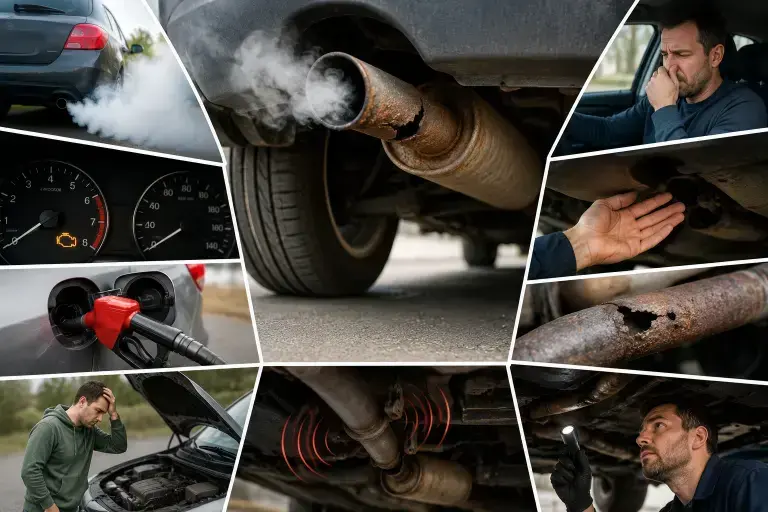
10 Exhaust Leak Symptoms You Should Never Ignore
1. Loud Engine Noise or Roaring Sound
This is usually the first and most noticeable of all exhaust leak symptoms. A leak near the engine or exhaust manifold often produces a loud, unmistakable roar or rattling noise that gets louder when you accelerate. If your car suddenly sounds like a race car when you step on the gas, there is a good chance that gas is escaping somewhere it should not be.
2. A Hissing or Popping Sound Under the Hood
A smaller leak, especially one near a gasket or a cracked pipe, can cause a hissing or ticking sound rather than a full roar. This sound is often most noticeable right after you start the car, when the engine and exhaust are still cold, and the metal has not fully expanded yet.
3. Reduced Fuel Efficiency
An exhaust leak throws off the oxygen sensor readings your engine relies on to manage the air and fuel mixture. When those readings are off, your engine computer often compensates by burning more fuel than necessary. If you are filling up more often than usual without a clear reason, an exhaust leak could be part of the problem.
4. A Check Engine Light Turning On
Modern vehicles are packed with sensors, and an exhaust leak can easily trigger one of them. The oxygen sensor and the air-fuel ratio sensor are especially sensitive to leaks, and when they detect something off, they send a signal straight to your dashboard. A check engine light does not always mean an exhaust leak, but it is worth ruling out.
5. Strong Smell of Exhaust Fumes Inside the Cabin
If you can smell exhaust while sitting in the car, especially with the windows up, take it seriously. This smell often points to a leak somewhere between the engine and the cabin, and it may mean carbon monoxide is entering the vehicle. This is one of the exhaust leak symptoms that should never wait until your next scheduled service.
6. Vibration Through the Steering Wheel, Pedals, or Floor
Exhaust leaks can throw off the balance and pressure of the entire system, and that imbalance sometimes shows up as vibration you can feel through the pedals, steering wheel, or even the floor of the car. It is easy to mistake this for a tire or suspension issue, so it is worth having a mechanic check the exhaust system too.
7. Burning Smell From Under the Vehicle
If exhaust gas is escaping near a heat shield, wiring harness, or other engine component, it can create a burning smell as the escaping heat interacts with nearby parts. This smell is different from the sulfur smell mentioned below and often points to a leak closer to the engine itself.
8. Rotten Egg or Sulfur Smell
A sulfur or rotten egg smell usually points to a problem with the catalytic converter, which can be damaged or affected by an upstream exhaust leak. This smell is hard to miss and should prompt a visit to a trusted repair shop as soon as possible.
9. Headaches, Dizziness, or Nausea While Driving
This is the most serious of all exhaust leak symptoms because it points to carbon monoxide exposure. Carbon monoxide is colorless and odorless, so by the time you notice headaches, dizziness, fatigue, or nausea during or after a drive, exposure may already be significant. If you or your passengers experience these symptoms, get fresh air immediately and have your vehicle inspected right away.
10. Failed Emissions Test
If your vehicle fails an emissions test, an exhaust leak is one of the most common culprits. Leaks allow unburned gases to escape before they pass through the catalytic converter, which means your car is releasing more pollutants than it should. A failed test is a clear signal that something in the exhaust system needs attention.
What Causes an Exhaust Leak?
Exhaust leaks usually come down to wear and tear, rust, or physical damage. Over time, the constant heating and cooling of the exhaust system causes metal to expand and contract, which weakens welds, gaskets, and joints. Rust is another major factor, especially in areas with road salt and wet winters, since it eats away at pipes and mufflers from the inside out. Physical damage from road debris, potholes, or a hard impact can also crack a pipe or knock a component loose. In some cases, a poorly installed part or an aging gasket after previous repair work is to blame. Whatever the cause, the fix usually involves replacing or repairing the damaged section rather than a quick patch job.
Is It Safe to Drive With an Exhaust Leak?
Driving with an exhaust leak is not something you want to do for long. A minor leak near the tailpipe might not pose an immediate health risk, but it still affects performance and fuel economy, and it will likely get worse over time. A leak closer to the engine or cabin is a bigger concern because it increases the risk of carbon monoxide entering the vehicle. Since carbon monoxide has no smell or color, the only real warning signs are the physical symptoms like headaches, dizziness, or fatigue. If you notice any of the exhaust leak symptoms listed above, it is safest to get the vehicle inspected before continuing to drive it regularly.
How Much Does It Cost to Fix an Exhaust Leak?
The cost of repairing an exhaust leak depends heavily on where the leak is located and how much damage has occurred. A small gasket replacement is usually the most affordable fix, while a full section of pipe or a new muffler will cost more. Leaks near the catalytic converter tend to be the most expensive to repair, since that part is costly on its own. Rather than guessing at the price, the best approach is to have a shop diagnose the exact location and extent of the leak so you get an accurate quote instead of paying for guesswork.
Can I Fix an Exhaust Leak Myself?
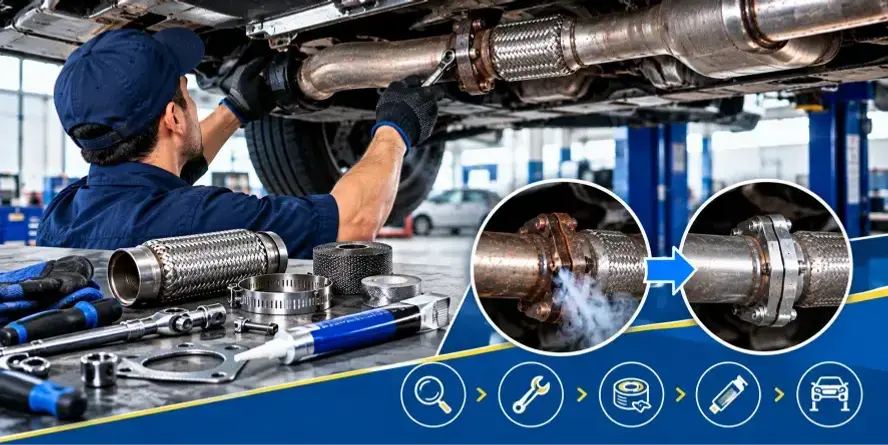
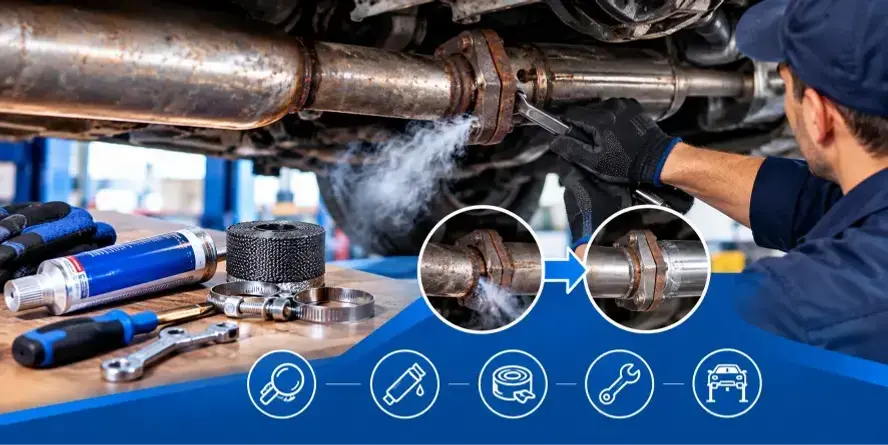
Some minor exhaust leaks, like a loose clamp or a small gasket issue, are technically within reach for someone comfortable working under a vehicle. However, most exhaust leaks require lifting the car safely, identifying the exact source of the leak, and sometimes welding or replacing pipe sections, which is not something most people have the tools or experience for. There is also the safety risk of working around a hot exhaust system and the danger of missing a leak that is closer to the cabin than it appears. For anything beyond a very minor fix, it is worth having a professional handle it properly.
How Do Mechanics Diagnose Exhaust Leak Symptoms?
A mechanic typically starts by listening to the engine while it runs, since many leaks produce a distinct sound that helps narrow down the general location. From there, they will visually inspect the exhaust system for cracks, rust, or damaged gaskets, often using a lift to get a clear view of the full length of the pipe. In some cases, a smoke test is used, where a harmless smoke is pumped through the exhaust system so technicians can see exactly where it escapes. This combination of listening, inspecting, and testing helps pinpoint the leak accurately instead of replacing parts based on guesswork.
How Long Can You Drive With an Exhaust Leak Before It Becomes Dangerous?
There is no fixed timeline, since it depends on the size and location of the leak. A tiny leak far from the cabin might be manageable for a short period, though it will keep getting worse. A leak closer to the engine or passenger compartment can become dangerous much faster, especially on longer drives where fumes have more time to build up inside the cabin. Rather than trying to estimate how long is too long, it is far safer to treat any of the exhaust leak symptoms above as a reason to book an inspection soon rather than later.
Protect Your Engine From Ongoing Exhaust Leak Symptoms
Catching exhaust leak symptoms early protects your engine, your wallet, and your health, so it is never worth waiting once you notice something off. Whether it is a strange noise, a bad smell, or a drop in fuel economy, getting it checked sooner rather than later usually means a simpler and more affordable fix.
KMF Automotive also offers a full range of services in Burnaby and Vancouver, including tire repair, brake repair, oil changes, timing belt repair, clutch repair, wheel alignment, auto air conditioning service in Burnaby, air conditioning service, and air conditioning service in Vancouver. See what our customers are saying on our Google reviews page.
Book a Trusted Burnaby Shop for Exhaust Leak Symptoms
If you are noticing any of the exhaust leak symptoms covered in this guide, the team at KMF Automotive can diagnose the issue and get it fixed properly. Visit our page on exhaust and muffler repair in Burnaby or contact us today to book your inspection.
Frequently Asked Questions About Exhaust Leak Symptoms
What does an exhaust leak sound like?
It usually sounds like a loud roar, rumble, or hissing noise coming from under the car, and it often gets louder when you press the gas pedal.
Can an exhaust leak cause a car to shake?
Yes. A leak can throw off the balance of the exhaust system, and that imbalance can show up as vibration through the pedals, steering wheel, or floor.
Will an exhaust leak damage my engine over time?
Left unrepaired, an exhaust leak can affect engine performance, throw off sensor readings, and put extra strain on the engine, which can lead to further damage down the road.
Can I smell an exhaust leak from inside my car?
Yes, and this is one of the more serious exhaust leak symptoms. If you smell exhaust fumes inside the cabin, it could mean carbon monoxide is entering the vehicle, so get it checked immediately.
Does an exhaust leak affect gas mileage?
Yes. A leak can throw off oxygen sensor readings, which often causes the engine to burn more fuel than it normally would.
How do I know if my exhaust leak is serious?
Symptoms like headaches, dizziness, or a strong exhaust smell inside the cabin point to a more serious leak that needs immediate attention, while a minor hissing sound near the tailpipe is usually less urgent but still worth fixing soon.
Key Takeaways
- Exhaust leak symptoms range from loud noises and bad smells to reduced fuel economy and physical symptoms like headaches or dizziness.
- Carbon monoxide exposure is the most serious risk, since it has no smell or color of its own.
- Common causes include rust, worn gaskets, physical damage, and wear from heat cycles over time.
- Repair costs vary depending on the location of the leak, with catalytic converter related leaks usually costing the most.
- Minor leaks may be a DIY job, but most exhaust leaks are best handled by a professional shop with the right tools and lift equipment.
- Ignoring exhaust leak symptoms can lead to engine damage, failed emissions tests, and health risks for you and your passengers.