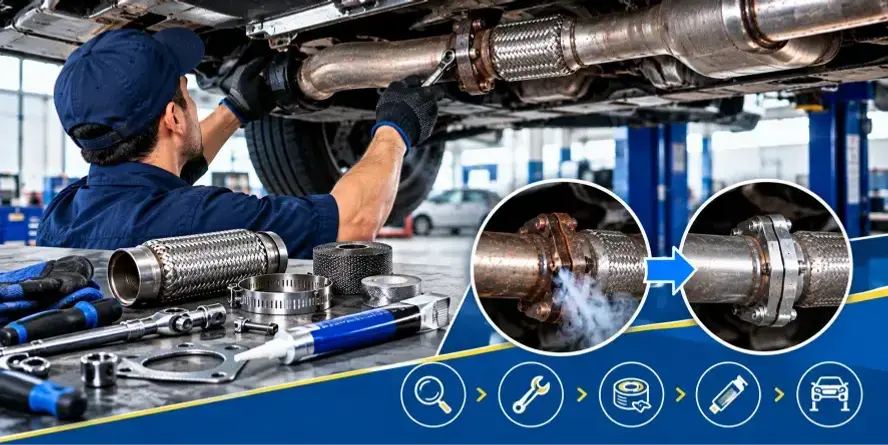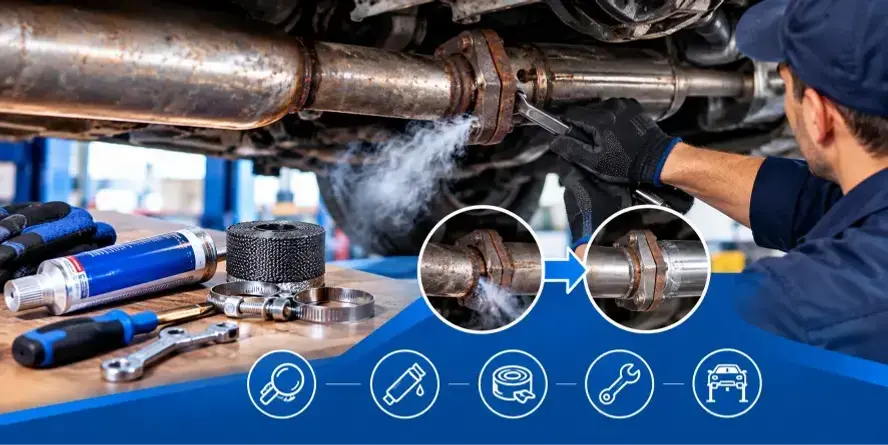

An exhaust leak allows scalding, highly toxic combustion gases to escape the exhaust system before reaching the catalytic converter and tailpipe. Identifying the warning signs of an exhaust leak early is critical to preventing engine damage, avoiding wasted fuel, and protecting yourself from dangerous carbon monoxide exposure inside the cabin.
Comprehensive List of Exhaust Leak Symptoms
When your vehicle develops an exhaust leak, it provides clear auditory, olfactory, and performance-based warning signs. Here is a detailed breakdown of what to watch for:
1. Loud Engine Noise (Ticking, Hissing, or Roaring)
The type of sound your vehicle makes often reveals the exact location of the leak:
- Cold Start Ticking Noise: A cracked cast-iron exhaust manifold or a blown manifold gasket produces a rapid, rhythmic “tick-tick-tick” noise when you start a cold engine. As the engine warms up, the metal expands and partially seals the gap, causing the sound to quiet down slightly.
- Hissing or Popping Under Acceleration: A small pinhole leak in an exhaust pipe, flange joint, or flexible pipe section creates a sharp hissing or popping sound when under load.
- Loud Deep Roar: A completely severed exhaust pipe, a rusted-out muffler, or a detached tailpipe causes the vehicle to sound like a race car or a lawnmower, producing a loud, deep roaring noise that increases with engine RPM.
2. Gas Odors or Burning Smells Inside the Cabin
- Raw Exhaust or Gasoline Smells: If an exhaust leak occurs upstream near the engine bay or under the front passenger floorboards, toxic gases easily seep into the vehicle’s Fresh Air HVAC intake vents.
- Burning Plastic or Rubber Odor: Escaping exhaust gases reach temperatures exceeding 1,200∘F (650∘C). If a leak blows hot gas directly onto nearby engine covers, wiring harnesses, or rubber hoses, it will melt these components and generate a harsh, burnt chemical smell.
3. Reduced Acceleration and Engine Performance
Modern internal combustion engines rely on precise exhaust backpressure and gas scavenging speeds to operate efficiently. A leak disrupts this closed system, causing:
- Hesitation or sluggish response when stepping on the gas pedal.
- Power loss when towing loads or climbing steep hills.
- Rough engine idling and stalling in severe cases.
4. Decreased Fuel Efficiency (Increased Gas Consumption)
Upstream oxygen (O2) sensors monitor the air-to-fuel ratio of the exhaust stream. If an exhaust leak occurs before or near an O2 sensor:
- Outside air is pulled into the exhaust stream through the leak.
- The oxygen sensor detects high levels of fresh oxygen and misinterprets the condition as a “lean” engine mixture (too much air, not enough fuel).
- The engine control module (ECM) compensates by injecting excess fuel into the engine cylinders, wasting fuel and dropping your miles per gallon (MPG).
5. Check Engine Light (CEL) Illumination
An exhaust leak frequently triggers diagnostic trouble codes (DTCs) on your dashboard:
- P0171 / P0174: System Too Lean (Bank 1 or Bank 2).
- P0420 / P0430: Catalyst System Efficiency Below Threshold.
- P0130 – P0167: Oxygen Sensor Circuit Malfunctions.
6. Steering Wheel or Floorboard Vibrations
When exhaust components rust through, crack, or lose their support hangers, the shifting exhaust pressure creates physical vibrations. You may feel a deep hum or buzzing sensation through the floorboards, gas pedal, or steering wheel while idling or cruising.
7. Visible Cracks, Flaking Rust, or Black Soot
Black soot around exhaust joints, welds, or the manifold can help identify a leak. Visible cracks, holes, and heavily flaking metal also warrant inspection. Surface rust alone does not confirm a leak, but crumbling pipework may require replacement rather than patching.
Symptom Breakdown by Exhaust Component Location
To help narrow down where the leak is originating, refer to this detailed diagnostic table:
| Component Location | Primary Symptom | Secondary Impact | Danger / Severity Level |
|---|---|---|---|
| Exhaust Manifold / Gasket | Loud ticking noise on cold starts | Melting engine bay wires; raw fumes in cabin | High (Fire and carbon monoxide hazard) |
| Flex Pipe | Metallic scraping, buzzing, or hissing sound | Increased vibration; loss of low-end torque | Moderate (Structural strain) |
| Catalytic Converter Flange | Strong sulfur / rotten egg smell; loud rattling | Failed emissions tests; high cabin gas odor | High (Toxic fume hazards) |
| Mid-Pipe / Resonator | Loud drone at highway speeds | Reduced fuel economy; low-frequency humming | Moderate |
| Muffler / Tailpipe | Deep roaring sound; hanging tailpipe | Excessive noise pollution; bumper heat damage | Low to Moderate |
Safety Warning: The Invisible Danger of Carbon Monoxide
Driving with an unresolved exhaust leak is an immediate health hazard. Exhaust gases contain high concentrations of carbon monoxide (CO), an odorless, colorless, and tasteless gas.
CRITICAL SAFETY WARNING: Exposure to carbon monoxide inside an enclosed car cabin reduces the blood’s ability to carry oxygen. If you experience unexpected headaches, dizziness, nausea, confusion, or drowsiness while driving:
- Immediately roll down all windows to circulate fresh air.
- Safely pull over to the side of the road and turn off the engine.
- Do not continue driving until the vehicle is inspected and repaired by a professional technician.
How Mechanics Diagnose an Exhaust Leak
If you suspect your vehicle has an exhaust leak, automotive technicians use three primary methods to pinpoint the exact opening:
- Visual Soot Trace Inspection: Technicians look for powdery black carbon deposits around flange gaskets, welded joints, and manifold bolt heads. Black soot marks indicate where hot gas has been escaping.
- Smoke Machine Pressure Test: A specialized automotive smoke machine is sealed into the tailpipe to pressurize the cold system with high-density smoke. Any leaks immediately blow visible plumes of smoke.
- Soapy Water Bubble Test: With the engine cold and running, technicians spray a soapy water solution onto pipe joints. Escaping gas creates visible soap bubbles at the leak point.
Estimated Exhaust Repair Costs
Repairing an exhaust leak depends on the damaged component’s accessibility and material cost:
- Exhaust Pipe Weld / Patch: $100 – $200 (Fixing small rust holes or pinhole cracks).
- Exhaust Gasket Replacement: $150 – $350 (Replacing a worn manifold or flange gasket).
- Flex Pipe Replacement: $200 – $400 (Cutting out a frayed flex pipe and welding in a new section).
- Exhaust Manifold Replacement: $500 – $1,200+ (Fixing warped or cracked cast-iron manifolds).
- Catalytic Converter Assembly: $800 – $2,500+ (Replacing damaged converters or integrated manifold units).
When Does a Muffler Need Replacement Instead of Patching?
Extensive corrosion or damaged internal baffles may make a muffler unsuitable for patching. The surrounding pipes and connections should also be inspected. On one-piece exhaust assemblies, replacing the muffler may involve cutting and joining pipe sections.
Frequently Asked Questions: exhaust leak symptoms
Can I drive with an exhaust leak?
You should avoid driving with an exhaust leak whenever possible. While a small muffler leak downstream is mostly noisy, an upstream manifold or catalytic converter leak poses severe risks of toxic cabin fumes, fire hazards, and engine damage.
Will an exhaust leak ruin my engine?
Yes, severe exhaust manifold leaks can ruin an engine. Cold outside air pulled back through a manifold leak can strike hot exhaust valves, causing them to warp or burn. Additionally, improper air-fuel ratios can overheat and melt the catalytic converter.
Why does an exhaust leak sound like a ticking noise?
Each time an engine cylinder fires, a high-pressure pulse of gas is forced into the exhaust manifold. If a crack or gasket leak exists, each pressure pulse pops through the tiny gap, creating a fast, metallic ticking sound that scales with engine speed.
Can I use exhaust tape or putty to fix a leak myself?
Exhaust repair tapes and putties are designed strictly as temporary emergency patches. High exhaust temperatures, moisture, and road vibration will cause temporary putties to crack and fail quickly. Permanent fixes require proper welding or component replacement.
How long can I delay fixing an exhaust leak?
You should not delay fixing an exhaust leak, especially if it is located near the engine or under the passenger cabin. Prolonged exposure to escaping gases can damage electrical wiring, melt surrounding rubber components, trigger failed emissions tests, and pose immediate health risks due to carbon monoxide exposure.
Will an exhaust leak cause my car to fail an emissions inspection?
Yes, an exhaust leak will almost certainly cause your vehicle to fail an emissions test. Escaping exhaust gases prevent oxygen sensors from reading correct air-fuel ratios, which triggers Check Engine Light codes (such as P0420 or P0171) and results in an automatic emissions failure.
Can Regular Epoxy Fix an Exhaust Leak?
Ordinary epoxy is unsuitable for exhaust repairs. Any repair compound must be specifically rated for the application and used according to its instructions. Even exhaust-rated products are temporary measures and cannot restore badly corroded metal or replace a damaged manifold.
Key Takeaways: exhaust leak symptoms
- Primary Sound Warning: A distinct ticking or tapping noise during cold starts that gets louder under hard acceleration.
- Health and Safety Hazard: Carbon monoxide (CO) and raw gas fumes entering the cabin air intake system.
- Performance Drops: Sluggish acceleration, poor throttle response, and noticeable drops in overall fuel economy.
- Dashboard Alerts: An illuminated Check Engine Light triggered by false lean air-fuel readings at the oxygen sensors.
- Physical Damage Risks: Scalding exhaust gases melting surrounding engine wiring, spark plug wires, or rubber hoses.