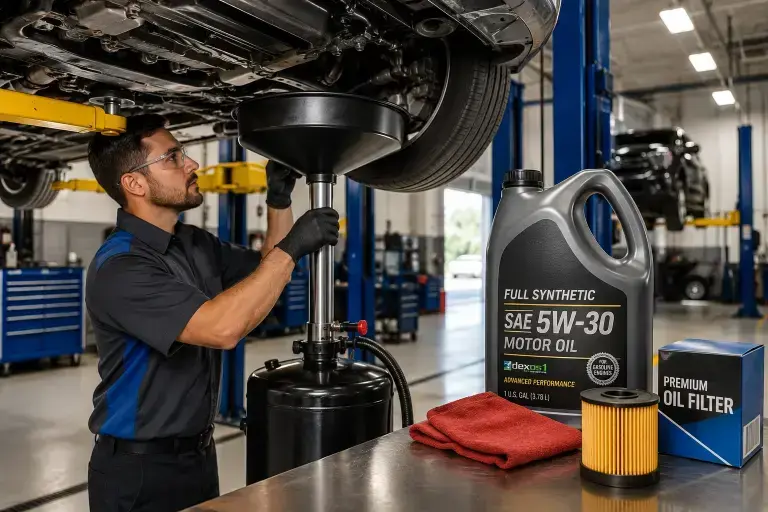
How often you should change your transmission fluid depends almost entirely on the type of gearbox your vehicle has and your everyday driving conditions. As a standard industry rule, automatic transmissions require fresh fluid every 95,000 to 160,000 kilometers (60,000 to 100,000 miles), while manual transmissions usually need a fluid swap every 48,000 to 95,000 kilometers (30,000 to 60,000 miles). Modern CVTs (Continuously Variable Transmissions) are highly sensitive and should have their fluid changed every 48,000 to 95,000 kilometers. Ignoring these milestones can lead to hard shifting, slipping gears, and catastrophic mechanical failure.
The Transmission Matrix Gearbox Type Dictates the Timeline
Unlike engine oil, which deals with harsh combustion byproducts, transmission fluid operates in a closed hydraulic system. However, intense friction and high operational heat degrade the fluid over time. Here is how service timelines break down by transmission layout:
Manual Transmissions
Manual gearboxes feature heavy metal-on-metal gear synchronization. Over thousands of kilometers, tiny microscopic metal shavings naturally shear off the gears and contaminate the fluid. Because manual fluids lack internal filtration systems, changing the fluid regularly is vital to flush these abrasive metal particles out of the case.
Traditional Automatic Transmissions
Automatic gearboxes rely on fluid not just for lubrication, but as a hydraulic fluid to physically shift gears and cool internal clutch packs. The high thermal strain eventually breaks down the fluid’s friction modifiers, meaning it must be replaced to prevent clutch slippage.
Continuously Variable Transmissions (CVTs)
Instead of fixed gears, CVTs utilize a steel belt sliding across variable pulleys. This setup generates an immense amount of internal heat and friction. CVT fluid requires specialized friction properties that degrade rapidly; stretching out this interval can completely destroy a CVT belt assembly.
The Myth of “Lifetime” Transmission Fluid
Many modern vehicle manufacturers stamp their owner’s manuals with the claim that the vehicle is equipped with “Lifetime Transmission Fluid” that never needs to be changed under normal operating conditions.
Mechanics and transmission engineers widely agree that this claim is highly misleading.
When a manufacturer says “lifetime,” they typically mean the lifetime of the original factory warrantyusually around 100,000 to 160,000 kilometers. Past that milestone, the fluid’s protective additives are entirely depleted. If you intend to drive your vehicle past its warranty period without buying a brand-new transmission, treating fluid as a regular maintenance item is mandatory.
Critical Warning Signs Your Transmission Fluid Is Failing
If your transmission fluid has degraded or dropped past a safe operational level, your vehicle will actively display distinct physical symptoms:
- Slipping Gears: If you press the gas pedal and your engine revs up aggressively but the vehicle fails to accelerate smoothly, or if the car spontaneously drops out of gear while driving, your fluid pressure is too low to hold the gears in place.
- Rough, Delayed, or Jerky Shifting: An automatic transmission should transition between gears smoothly. If your car hesitates before executing a shift, or slams violently into gear with a noticeable “clunk,” the fluid’s hydraulic properties are compromised.
- A Discolored or Burning Dipstick: Fresh automatic transmission fluid is a bright, translucent cherry red. If you check your transmission dipstick and the fluid is dark brown, opaque black, or emits a distinct burnt-toast odor, it has suffered severe thermal breakdown and must be flushed out immediately.
Fluid Flush vs. Fluid Drain & Fill What’s the Difference?
When scheduling a transmission service, you will generally be offered two entirely different service options:
Drain and Fill (Recommended for Older/High-Mileage Vehicles)
The technician removes the oil pan plug or the transmission pan, allowing the fluid to naturally drain out via gravity. This process safely removes roughly 40% to 60% of the total fluid volume, as a large amount remains trapped inside the torque converter. The pan is cleaned, a fresh internal transmission filter is installed, and clean fluid is added. This is the safest approach for high-mileage cars, as it introduces fresh additives without shocking the system.
Fluid Flush / Exchange (Best for Regular Preventive Maintenance)
A specialized machine is connected directly to the transmission cooler lines. It uses the vehicle’s internal pump to systematically push out 100% of the old, contaminated fluid while simultaneously injecting brand-new fluid into the system. While highly effective at clearing out all debris, a full flush should be avoided on a transmission that has skipped maintenance for years, as the high fluid velocity can dislodge old sludge and clog tiny hydraulic valve bodies.
The Alignment and Comprehensive Chassis Connection
Because replacing transmission fluid requires lifting your vehicle onto a commercial hoist and removing heavy underbody splash arrays, it provides an ideal operational window to inspect your underlying suspension components, steering links, and tire structures.
During this service, technicians will check your front axles, constant velocity (CV) boots, and look for signs of uneven tire tread wear. If your tire shoulders are scrubbing away unevenly, pairing your drivetrain fluid service with a computerized wheel alignment is a highly efficient choice. Readjusting your suspension angles eliminates highway tracking drift, maximizes rolling fuel efficiency, and keeps your tires running perfectly parallel.
Comprehensive Automotive Solutions
Maintaining an automobile requires treating it as an interconnected network of components. Bringing your car into an independent garage for a transmission service opens up an efficient window to tackle other pending maintenance items without scheduling multiple diagnostic appointments.
A premier, full-service workshop handles everything required to keep your automobile dependable and safe. If your brakes are squealing or displaying a soft pedal feel, a comprehensive brake repair service will fully restore your stopping confidence. If your vehicle is exhibiting complex running issues, licensed technicians can pinpoint the exact wheel sensor or wiring issue triggering an ABS light or check engine alert.
From restoring crisp, icy airflow with an expert air conditioning service to tracking down complex mechanical faults, comprehensive care saves time. If your manual gearbox is fighting your inputs up steep hills, a specialized clutch repair balances your power delivery. Furthermore, for high-mileage engines, booking a preemptive timing belt repair provides absolute insurance against catastrophic internal engine valve damage.
Restoring Drivetrain Protection and Total Peace of Mind
Allowing old, broken-down transmission fluid to run past its service life leaves your vehicle highly vulnerable to internal gear wear, burnt clutch plates, and sudden hydraulic failure. Opting for a professional, warranty-approved fluid service completely removes old friction debris, keeps your gear shifts crisp and predictable, and ensures your daily commutes remain efficient and worry-free.
Frequently Asked Questions: how often to change transmission oil
What is the main difference between a wheel alignment and tire balancing?
A wheel alignment corrects the physical structural angles of your steering links and suspension components so that the tires roll perfectly parallel to each other and track straight. A professional tire repair service incorporates wheel balancing, which utilizes tiny weights on the rim flange to counteract natural heavy spots within the spinning tire assembly, completely removing high-speed steering wheel vibrations.
Can changing old transmission fluid cause a transmission to fail?
No. Fresh fluid itself does not cause failure. However, if a transmission is already slipping due to severe mechanical wear, the old fluid becomes heavily saturated with friction material from worn-down clutches, which helps the transmission grab. Flushing away that debris with fresh, slippery fluid can expose the pre-existing wear, making the slipping worse. That is why a gentle drain and fill is preferred for neglected gearboxes.
Is automatic transmission fluid the same as manual transmission fluid?
No, they are entirely different chemical formulations. Automatic transmission fluid (ATF) is a thin, low-viscosity hydraulic fluid designed to operate clutches and valves under pressure. Manual transmission fluid is typically a much thicker, heavy gear oil (often 75W-90) designed exclusively to cushion heavy metal gears spinning against one another.
How do I check my transmission fluid level at home?
Many modern automatic vehicles feature a “sealed” transmission with no dipstick under the hood, requiring a mechanic to check the level from underneath while the fluid is at a specific temperature. If your car does have a dipstick, park on a level surface, leave the engine idling in “Park” (engine must be warm), pull the dipstick, wipe it, reinsert it, and read the level on the “Hot” indicator line.
Why is CVT fluid more expensive than standard automatic transmission fluid?
CVTs require advanced synthetic fluids with highly specialized friction modifiers. The fluid must provide enough lubrication to protect bearings, yet create enough traction to prevent the heavy steel chain from slipping on smooth metal pulleys under heavy load. Standard ATF cannot handle this specific friction profile.
What happens if the transmission fluid level gets too low?
When fluid levels drop due to an undetected leak, the internal pump draws air into the system. This creates aerated, foaming fluid that cannot build the hydraulic pressure required to engage clutches. The transmission will slip, overheat rapidly, and eventually cause permanent mechanical failure.
Key Takeaways: how often to change transmission oil
- The Baseline Blueprint: Expect to change traditional automatic transmission fluid every 95,000 to 160,000 kilometers, while manuals and CVTs require changes closer to 48,000 to 95,000 kilometers.
- Don’t Trust “Lifetime” Claims: No fluid lasts forever; “lifetime” ratings are designed to get a vehicle through its warranty period, not to maximize long-term longevity.
- Watch the Fluid Color: Keep an eye out for discolored brown or black fluid with a burnt-toast smell, which signals immediate thermal breakdown.
- Flush vs. Drain Realities: Use a gentle drain and fill for high-mileage, older vehicles, and save full machine flushes for regular preventive care.
- Maximize Your Lifting Window: Raising your vehicle for transmission service is the perfect opportunity to evaluate suspension links, making a steering alignment highly efficient if uneven tire wear is found.
- Independent Trust Frameworks: Trusting your vehicle to an established independent repair center guarantees factory-approved fluid weights, certified technicians, and completely transparent pricing.