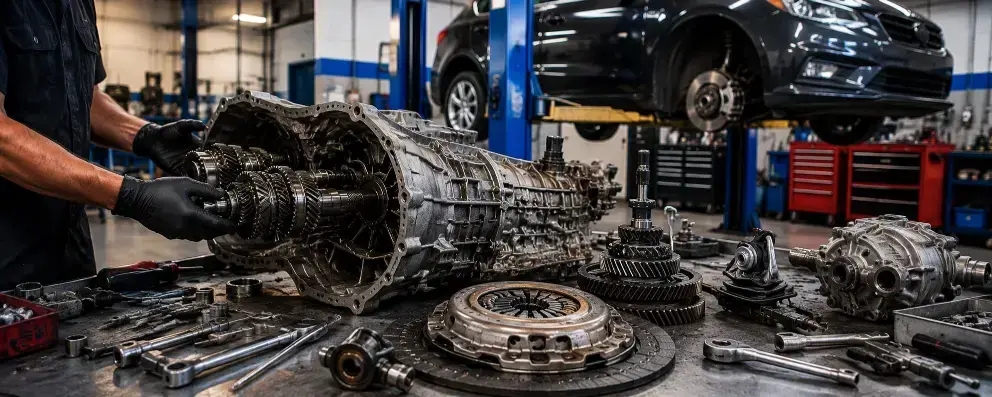
A failing manual transmission compromises your control over your vehicle and poses a major highway safety hazard. This comprehensive guide details the key warning signs of gearbox wear, such as slipping clutches and grinding gears. Learn the vital steps to check fluid health and when to visit a certified local technician. Protect your vehicle investment and book a comprehensive multi-point diagnostic inspection today.
What Controls the Lifespan of a Manual Gearbox
Several critical variables establish how long your vehicle’s manual transmission operates before requiring mechanical service. Your personal driving habits are the most significant factor; riding the clutch pedal or forcing gear shifts strains internal synchronizers rapidly over time. Additionally, towing heavy loads or carrying excess cargo places massive thermal stress on the pressure plate assembly. Regularly maintaining fluid levels also dictates longevity, as running low on lubrication causes immediate metal-on-metal friction and rapid tooth wear. To see how these maintenance factors impact your vehicle, visit the KMF Automotive homepage for a full overview of our certified repair standards.
How to Spot Early Warning Signs of Transmission Failure
Catching manual transmission issues early prevents minor mechanical glitches from snowballing into catastrophic road failures. If your car rhythmically pops out of gear while cruising or if you feel a harsh vibration through the shift lever, your internal linkages are worn. Spotting dark puddles of red or brown fluid under your parked vehicle signals a compromised output shaft seal that requires swift replacement. If your vehicle struggles to accelerate up steep hills despite the engine revving high, your clutch friction material is completely spent.
Recognizing the Major Symptoms of a Failing Clutch System
The clutch system acts as the direct mechanical bridge between your engine block and the gearbox assembly. When a clutch fails, it typically displays unmistakable symptoms:
- Pedal Stiffness or Softness: A pedal that feels rock hard or drops effortlessly to the floorboards points to hydraulic line leaks or master cylinder pressure loss.
- Slipping Shifting Action: The vehicle struggles to catch a gear under load, causing your RPMs to spike without a matching increase in highway speed.
- Burning Friction Odour: A distinct, acrid burning smell during everyday driving indicates that the friction disc is slipping constantly against the flywheel, producing extreme heat.
When Are Gearbox Malfunctions Too Severe to Fix at Home
Certain mechanical transmission faults are entirely too dangerous and complex to troubleshoot in a residential driveway with basic hand tools. If your gearbox seizes completely or refuses to engage a single gear, you are dealing with broken internal shift forks or shattered gear teeth. Furthermore, bleeding modern hydraulic clutch linkages or pressing out stubborn wheel bearings demands heavy-duty commercial shop presses. Attempting an independent overhaul without specialized diagnostic hoists compromises your personal safety, making a trip to a fully equipped garage an absolute necessity.
Why Professional Fluid Inspections Keep You Safe on the Road
Simply peering through a fluid fill plug at home does not reveal the true chemical health of your internal gearbox lubrication. Over thousands of kilometers, manual transmission fluid breaks down under intense friction, losing its protective viscosity. A certified technician utilizes magnetic drain plug analysis to check for heavy steel flaking that signals internal gear chipping. They will flush out old, contaminated oil and refill your system with factory-approved formulas like high-performance Valvoline Manual Transmission Fluid or heavy-duty AMSOIL 75W-90 Gear Lube to restore smooth shifting.
Where Can You Get Professional Manual Transmission Repair Burnaby
You do not have to endure stressful gear shifts or guess about the safety of your vehicle’s drivetrain hardware. Bringing your car to a trusted local garage ensures your internal gears and synchronizers are inspected with absolute accuracy. Our team evaluates your vehicle’s shifting performance, checks for leaks, and replaces worn internal components using premium parts. Schedule a transparent, factory-approved multi-check inspection and comprehensive auto repair services with our top-rated mechanical team today.
How to Extend the Longevity of Your Manual Drivetrain
Adopting mindful shifting habits saves your vehicle from sudden component failures and protects your wallet from premature garage visits. Always press the clutch pedal completely to the floorboard before moving the shift lever to prevent chipping the gear teeth. Avoid resting your hand heavily on the shifter knob while driving, as this constant pressure pushes the shift forks against the spinning synchronizers, causing hidden wear. Periodically replacing your transmission fluid every fifty thousand kilometers also flushes out microscopic grit before it can scar delicate bearings.
Rely on Certified Technicians for Complete Automotive Care in Burnaby
Preserving the mechanical reliability, everyday safety, and long-term resale value of your car requires dedicated expertise and premium replacement parts. From basic fluid maintenance and brake tuning to computerized engine diagnostics and complex manual drivetrain rebuilding, choosing an established facility guarantees elite results. The certified professionals at our top rated auto repair shop in Burnaby combine transparent pricing with meticulous skill to keep your vehicle running smoothly.
Contact Our Local Facility to Book Your Repair Appointment Today
Do not take unnecessary risks with grinding gears, a stiff clutch pedal, or fluid leaks that threaten your control on the road. Secure a fast, factory-approved mechanical solution that eliminates the stress of automotive maintenance and keeps your commute completely safe. Click over to our dedicated booking portal right now to contact us and schedule your precision service appointment today.
Frequently Asked Questions
Can I replace just the clutch disc and keep the old pressure plate
No, modern service centers strongly advise against swapping only the friction disc during a drivetrain overhaul. A standard high-quality assembly, like the LuK Clutch Kit, bundles a fresh pressure plate, release bearing, and alignment tool together. Reusing a heat-warped pressure plate prevents the new disc from engaging smoothly, causing immediate chatter and cutting your repair’s lifespan in half.
How long does a standard manual gearbox repair service take
A standard clutch replacement or minor seal repair typically takes between three to five hours in a properly equipped garage. If your vehicle suffers from severe internal damage that demands a complete gearbox teardown, cleaning, and gear rebuilding, the total shop timeline can extend to two business days. We always provide clear time frames upfront.
Why does my vehicle make a loud grinding sound when shifting gears
A harsh grinding noise during gear selection means your internal synchronizer rings are worn out or broken. The synchronizer’s primary job is to match the rotational speed of the input shaft with the gear you are selecting. When it fails, the spinning metal teeth clash directly against each other, causing immediate structural damage.
What happens if I continue driving with a slipping clutch disc
Ignoring a slipping clutch is dangerous and rapidly escalates into a massive financial headache. The constant friction generates extreme heat that will quickly crack and warp your expensive engine flywheel. Eventually, the friction material will wear away completely, leaving you stranded on the highway unable to transfer any power to the wheels.
How often should you inspect your manual transmission fluid
You should have your manual transmission fluid level and quality inspected at least once every twelve months or every twenty thousand kilometers. Combining this check with your regular tire rotation or oil change is highly convenient, as lifting the vehicle gives technicians a clear view of the casing seals.
Is it safe to operate a vehicle if it pops out of gear unexpectedly
No, it is highly unsafe to drive a vehicle that slips out of gear while moving. This erratic behavior can happen during highway overtaking or busy intersection turns, suddenly cutting your power and leaving you vulnerable to collisions. If your vehicle displays this symptom, it requires immediate professional diagnostics.
Key Takeaways: Manual Transmission Repair Burnaby
- Never ignore grinding noises because gear damage quickly leads to total transmission failure
- A slipping clutch causes your engine to rev without accelerating, indicating worn hardware
- Replacing degraded transmission fluid removes microscopic metal shavings that accelerate wear
- Extreme shifting stiffness or fluid leaks demand immediate computerized diagnostic attention
- Booking a certified technician guarantees precise component matching and warrantied mechanical repairs