Dual Clutch Transmissions (DCTs) deliver lightning-fast gear changes and exceptional performance, but they require specialized fluid maintenance and clutch calibration to operate smoothly. Neglecting routine service can lead to clutch shudder, overheating, delayed gear engagement, and expensive mechanical repairs. This guide covers how DCT systems work, common warning signs of fluid degradation, and where to schedule certified dual clutch transmission service in Burnaby. Click to open side panel for more information.
How Dual Clutch Transmissions Work
A Dual Clutch Transmission (DCT) also known as DSG, PDK, or DCT depending on your vehicle manufacturer combines the performance efficiency of a manual gearbox with the ease of an automatic. Inside the transmission, two separate clutches handle alternating gear sets: one operates the odd-numbered gears (1st, 3rd, 5th), while the other manages the even-numbered gears (2nd, 4th, 6th). While you drive in one gear, the secondary clutch pre-selects the next gear ratio. This architecture enables near-instantaneous gear changes, but it relies heavily on high-shear hydraulic fluid to actuate the clutches and cool internal gears. To learn how overall drivetrain checks maintain performance, visit the KMF Automotive homepage for an overview of our service standards.
How to Spot Warning Signs Demanding Dual Clutch Transmission Service
Catching DCT fluid degradation and wear early prevents minor hydraulic hesitations from escalating into severe transmission failure:
- Shuddering or Vibration During Takeoff: The vehicle stutters or judders when accelerating from a complete stop.
- Delayed or Hesitant Gear Shifts: A noticeable lag occurs when the transmission attempts to engage the next pre-selected gear.
- Transmission Overheating Warnings: High dashboard temperature alerts appear during heavy stop-and-go city driving in Burnaby.
- Harsh Gear Engagement Clunks: Loud metallic clunks occur when downshifting or coming to a stop.
- Fluid Leaks Under the Casing: Dark synthetic fluid pooling underneath points to failing driveshaft or pan seals.
Wet Clutch vs. Dry Clutch DCT Requirements
Understanding your specific DCT architecture is critical when planning maintenance:
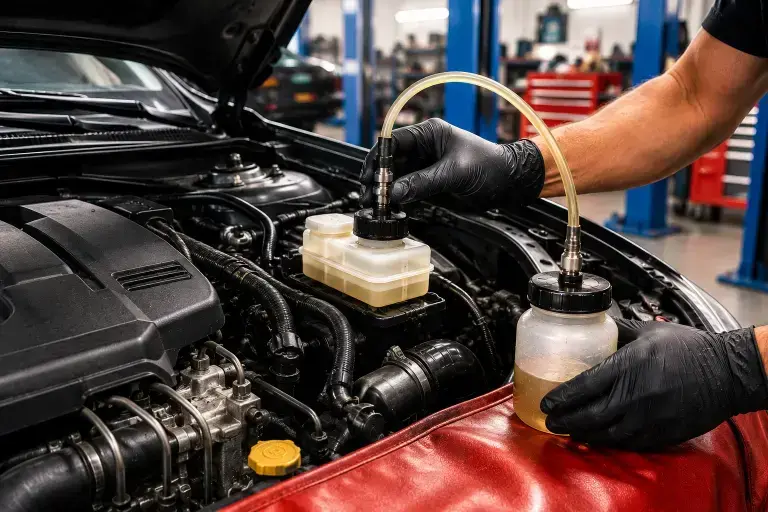
- Wet-Clutch DCT Systems: The clutches sit continuously submerged in specialized hydraulic transmission fluid. This fluid cools the clutch plates during heavy friction events but absorbs high heat and metal wear particles, making routine fluid and internal filter flushes crucial.
- Dry-Clutch DCT Systems: The clutches operate without oil immersion, relying on air cooling. While they require less fluid volume, dry DCTs use specialized gear oil for internal shafts and require periodic mechanical clutch adjustments and computer relearns.
Why Specialized Diagnostic Tools Are Essential for DCT Service
Servicing a Dual Clutch Transmission involves much more than draining and refilling fluid. Proper fluid level verification requires precise temperature monitoring using advanced OBD-II diagnostic scan tools, as expanding fluid levels alter internal hydraulic pressure. Following a fluid change, certified mechanics perform a digital “clutch adaptation relearn,” allowing the transmission control module (TCM) to recalibrate clutch bite points and compensation values for internal friction wear.
Where Can You Get Professional Dual Clutch Transmission Service in Burnaby
You do not have to endure harsh gear shifts, transmission shudder, or worry about getting stranded in traffic. Bringing your vehicle to an established local facility ensures certified technicians accurately inspect your DCT assembly, flush degraded fluid, replace high-pressure filters, and complete software adaptations. Our team uses factory-approved synthetic lubricants designed specifically for European and Asian DCT applications. Schedule a transparent diagnostic evaluation and complete auto repair services with our top-rated mechanical team today.
How to Extend the Longevity of Your Dual Clutch Transmission
Adopting proactive driving habits preserves internal clutch linings and prevents thermal degradation:
- Avoid Creeping in Traffic: Letting your vehicle slowly roll without pressing the accelerator forces wet clutches to slip continuously, generating intense localized heat.
- Never Hold the Vehicle on Hills with the Accelerator: Use the brake pedal or hill-hold assist on steep Burnaby inclines to prevent continuous friction on the clutch pack.
- Shift to Neutral During Extended Idling: Move the selector into Neutral if sitting stationary in heavy traffic for extended periods to reduce thermal stress.
- Follow Factory Maintenance Intervals Strictly: Change fluid and filters every 60,000 to 90,000 kilometers without delay.
Rely on Certified Technicians for Complete Automotive Care in Burnaby
Preserving the performance, safety, and long-term resale value of your vehicle demands verified mechanical expertise and quality replacement hardware. From routine fluid maintenance and brake overhauls to complex transmission diagnostics and DCT servicing, choosing a trusted facility guarantees total peace of mind. The professional team at KMF Automotive Ltd, Click to open side panel for more information in Burnaby, Click to open side panel for more information, focuses on delivering transparent pricing and quality workmanship to keep your car operating at its peak.
Contact Our Local Facility to Book Your Repair Appointment Today
Do not take unnecessary risks with jerky gear shifts, shuddering acceleration, or deferred maintenance windows that put your drivetrain at risk. Secure a fast, factory-approved solution that keeps your daily commute stress-free and protects your vehicle investment. Click over to our main digital booking portal right now to contact us and schedule your diagnostic appointment today.
Frequently Asked Questions: dual clutch transmission service Burnaby
Is DCT fluid the same as standard automatic transmission fluid (ATF)
No, DCT fluid uses a highly specialized formulation engineered to provide extreme shear stability, precise friction coefficients for clutch engagement, and rapid heat dissipation. Using standard ATF or incorrect fluid specs in a dual clutch gearbox will lead to clutch slippage, rapid wear, and total unit failure.
How long does a dual clutch transmission service take
A comprehensive DCT service typically takes between 2 to 3 hours in a fully equipped automotive repair facility. The procedure includes draining old fluid, replacing internal high-pressure and suction filters, refilling OEM-spec fluid at precise operating temperatures, and executing an electronic clutch relearn procedure.
Can a fluid change fix DCT shuddering and jerky shifting
If the shuddering is caused by thermal fluid breakdown or dirty hydraulic passages, a complete fluid and filter flush accompanied by a clutch adaptation relearn often restores smooth shifting performance. However, if internal friction plates are physically worn out, a mechanical clutch pack replacement will be necessary.
How often should DCT fluid be changed?
Most manufacturers recommend replacing DCT fluid and filters every 60,000 to 90,000 kilometers (or every 4 to 5 years). Vehicles driven frequently in heavy urban stop-and-go conditions or subjected to spirited driving require more frequent service to prevent fluid breakdown.
What happens if I ignore my scheduled DCT service window
Driving past your service window allows contaminated, shear-degraded fluid to circulate through delicate mechatronic control units and solenoid valves. Over time, heat and micro-metallic debris break down hydraulic seals, causing slipping clutches, valve body damage, and multi-thousand-dollar transmission replacement costs.
What is a DCT clutch relearn or adaptation
A DCT clutch relearn is a software procedure executed via specialized diagnostic equipment that resets the transmission control unit’s calibration points. It teaches the computer the exact physical position where the clutches engage, compensating for normal friction disc wear and ensuring smooth gear transitions.
Key Takeaways: dual clutch transmission service Burnaby
- Schedule a comprehensive DCT fluid and filter change every 60,000 to 90,000 kilometers
- Jerky shifting and shuddering during acceleration signal fluid shear or clutch wear
- Wet-clutch and dry-clutch DCTs require specific, non-interchangeable fluid formulations
- Software recalibrations and clutch adaptions restore crisp, factory-spec shifting points
- Booking a certified local facility protects your high-performance drivetrain from premature failure