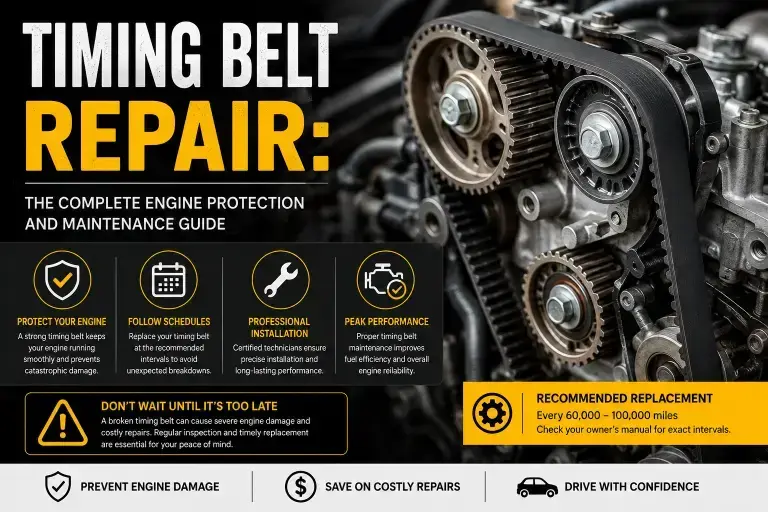
A timing belt is one of the most critical mechanical components inside an internal combustion engine. Because a snapped belt can instantly cause catastrophic valve and piston collisions, staying proactive with regular inspections and timely replacement is essential. This guide explains how timing belt systems operate, key symptoms of premature wear, replacement timelines, and when to book certified professional service.
What Does a Timing Belt Do Inside Your Engine
Understanding the structural role of a timing belt helps highlight why proper maintenance is non-negotiable. The reinforced rubber belt features precision-molded teeth that synchronize the rotation of the crankshaft and camshaft. This continuous synchronization ensures your engine’s valves open and close at exact microsecond intervals relative to piston movement. To explore how comprehensive engine care preserves long-term vehicle health, visit the KMF Automotive homepage for an overview of our certified diagnostic services.
kmfautomotive.com
Why Timely Timing Belt Repair Prevents Catastrophic Damage
Deferring a timing belt repair is one of the riskiest delays a vehicle owner can make. In an “interference engine” design, the pistons and valves share the exact same physical space inside the cylinder at different times. If the timing belt snaps, the camshaft stops turning immediately while the pistons continue moving at thousands of RPMs, hammering directly into open valves. This single failure can bend valves, crack cylinder heads, and gouge piston tops, resulting in thousands of dollars in major engine rebuilds.
Recognizing Warning Signs That Call for Timing Belt Repair
Catching early symptoms of wear allows you to schedule maintenance before total component failure occurs:
- Ticking or Squealing Noises: A worn belt or loose tensioner pulley creates a high-pitched squeal or rhythmic metallic ticking coming from the front timing cover.
vancouverfleetservices.ca - Engine Misfires and Rough Idling: Slipping teeth cause the camshaft to fall out of sync with the crankshaft, leading to poor combustion and active engine misfires.
- Oil Leaks Near the Front Housing: Camshaft or crankshaft seal leaks allow hot oil to coat the rubber belt, rapidly breaking down its material compound.
When Is Timing Belt Replacement Too Complex for a Driveway DIY
Replacing a timing belt requires far more than basic hand tools; it demands complete front-end engine disassembly and absolute timing precision. Technicians must remove drive belts, engine mounts, harmonic balancers, and protective covers to access the belt. Realigning the camshaft and crankshaft timing marks by even one tooth off will prevent the engine from running or cause immediate internal valve damage upon startup. Because setting hydraulic tensioners and holding camshaft alignment requires specialty locking tools, trusting an expert facility is the safest option.
kmfautomotive.com
Why Modern Service Kits Include Water Pumps and Tensioners
During a professional service, technicians install a complete component kit rather than swapping just the rubber belt itself. High-quality replacement packages, such as the Gates PowerGrip Timing Belt Kit or the SKF Timing Belt and Water Pump Kit, combine a fresh belt, tensioner bearings, idler pulleys, and a new water pump. Since accessing the water pump requires removing the timing belt entirely, replacing these wear items together eliminates redundant labor costs and guarantees reliable performance across the entire drive system.
kmfautomotive.com
Where Can You Get Professional Timing Belt Repair in Burnaby
You do not have to risk expensive engine damage or guess whether your vehicle’s timing components are secure. Bringing your car to an established local facility ensures certified mechanics perform precise diagnostic checks using factory specifications. Our team conducts thorough inspections, replaces worn tensioners and water pumps, and calibrates your engine’s timing with complete accuracy. Schedule your factory-approved timing belt repair in Burnaby with our experienced mechanical team today.
vancouverfleetservices.ca
How to Protect Your Engine and Maximize Belt Lifespan
While timing belts naturally degrade due to age and mileage, simple maintenance habits help prevent premature failure. Address front engine oil or coolant leaks immediately, as petroleum fluids weaken rubber compounds and cause belt slippage. Avoid harsh engine revving when starting cold, and stick strictly to your manufacturer’s recommended maintenance schedule. Regularly inspecting accessory drive belts also keeps stray debris from snapping off and lodging behind your timing cover.
vancouverfleetservices.ca
Rely on Certified Technicians for Complete Automotive Care in Burnaby
Preserving engine performance, road safety, and long-term resale value demands verified mechanical expertise and quality replacement hardware. From routine fluid maintenance and brake overhauls to complex timing belt replacements and engine diagnostics, selecting a trusted facility ensures total peace of mind. The professional team at our top-rated auto repair shop in Burnaby focuses on delivering transparent estimates, clear communication, and reliable workmanship.
Contact Our Local Facility to Book Your Repair Appointment Today
Do not take unnecessary chances with ticking engine noises, deferred maintenance schedules, or fluid leaks that put your vehicle at risk. Secure a fast, factory-approved solution that protects your engine investment and keeps your daily commute stress-free. Visit our digital booking portal right now to contact us and schedule your professional service appointment today.
Frequently Asked Questions: a timing belt
What is the difference between a timing belt and a timing chain?
A timing belt is made of high-strength rubber reinforced with synthetic cords and operates quietly outside the main oil gallery. A timing chain is made of heavy-duty metal links, runs inside the engine lubricated by motor oil, and generally lasts much longer. However, timing belts require routine replacement at specific mileage intervals, whereas timing chains rely on frequent oil changes to prevent stretch.
How long does a timing belt repair service take
Replacing a timing belt assembly typically takes between four to eight hours in a fully equipped shop. The timeline accounts for front-engine disassembly, replacing associated tensioners and the water pump, setting exact timing marks, and verifying system operation under load before releasing the vehicle.
kmfautomotive.com
Can a timing belt be inspected visually without disassembly
While a technician can remove a top access cover to inspect for surface cracking, fraying edges, or oil contamination, a visual check alone cannot determine internal cord fatigue. Because rubber belts wear from the inside out, adhering to manufacturer mileage recommendations is the most reliable way to prevent sudden snaps.
What happens if the water pump fails on a timing belt system
In many modern engines, the timing belt drives the water pump directly. If the water pump bearing seizes, it will instantly shred the timing belt, causing the engine to lose timing and overheat simultaneously. Replacing the water pump alongside the timing belt prevents this scenario entirely.
How do I know if my vehicle has an interference engine
Most modern high-compression gas and diesel engines utilize an interference design to maximize fuel efficiency and power output. You can verify your specific engine architecture in your owner’s manual or by consulting with a certified mechanic during your routine service inspection.
Is it safe to drive with a noisy timing belt tensioner
No, driving with a squealing or loose timing belt tensioner is extremely dangerous. A failing tensioner allows the timing belt to slip off its pulley teeth or lose tension, causing immediate engine misfires or complete belt failure while driving.
Key Takeaways: a timing belt
- Replace your timing belt according to factory intervals—typically every 100,000 to 160,000 kilometers
kmfautomotive.com - Interference engines suffer severe internal valve damage if a worn timing belt snaps while driving
- Squealing noises, engine misfires, and oil leaks around the timing cover indicate severe belt wear
kmfautomotive.com - Always replace the tensioner, idler pulleys, and water pump at the same time during timing belt service
- Booking a certified technician guarantees precise alignment and full protection for your engine