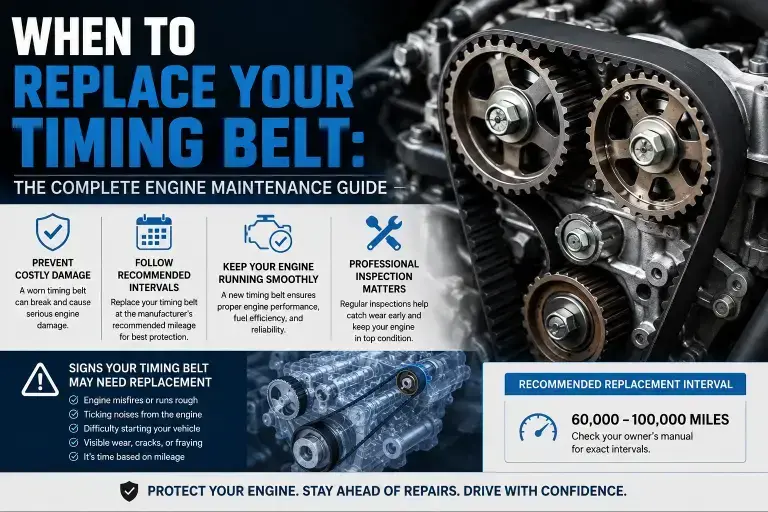
A timing belt is one of the most vital components under your hood. Most auto manufacturers recommend replacing your timing belt every 100,000 to 160,000 kilometers (or 6 to 10 years, whichever comes first). Because a snapped belt can cause catastrophic internal engine damage on interference engines, replacing it proactively according to factory maintenance schedules is essential for avoiding multi-thousand-dollar engine rebuilds.
What Factors Dictate When to Replace Your Timing Belt
Several critical variables influence the exact lifespan of your timing system components. The primary factor is your vehicle’s specific manufacturer interval, which varies depending on engine design and materials. Driving in extreme temperature environments, frequent stop-and-go commuting, and engine oil or coolant leaks near the timing housing accelerate rubber breakdown. Additionally, aging hydraulic tensioners or worn idler bearings place uneven stress on the belt, significantly shortening its functional lifespan. If you want to review how these factors impact your overall engine health, visit the KMF Automotive homepage for a full overview of our diagnostic philosophies.
How Mileage and Time Intervals Determine Replacement
When planning your vehicle’s long-term maintenance, you must follow both mileage and time-based guidelines. Standard factory intervals usually fall between 100,000 and 160,000 kilometers. However, even if your vehicle has logged low mileage, rubber naturally degrades, hardens, and cracks due to age and heat exposure. If your timing belt is over 6 to 10 years old, it should be replaced immediately regardless of what your odometer reads to ensure continuous engine protection.
Understanding the Dangers of Interference vs Non-Interference Engines
Knowing your engine’s internal architecture is crucial when evaluating when to replace your timing belt. In an interference engine, the clearance between the open valves and moving pistons is extremely small. If the belt snaps, the camshaft stops turning immediately while the pistons continue moving at thousands of RPMs, crashing directly into the open valves. In a non-interference engine, the valves and pistons do not share the same physical space, meaning a snapped belt will stall your car without destroying internal engine components.
When Are Symptoms Too Severe to Delay Timing Belt Service
You should routinely monitor your engine bay for physical warning signs of belt fatigue before a sudden breakdown occurs. If you hear a rhythmic ticking noise coming from the front engine cover or a high-pitched squealing from worn tensioners, your timing system requires attention. Engine misfires, rough idling, delayed acceleration, and oil accumulation around the timing cover gaskets are clear indicators that your belt is slipping or degrading rapidly, making immediate mechanical care necessary.
Why Replacing the Water Pump and Tensioners at the Same Time Saves Money
Attempting to replace only the rubber belt while leaving aging hardware behind is a risky strategy. Premium complete service kits, such as the Gates PowerGrip Timing Belt Kit or the SKF Timing Belt and Water Pump Kit, include a fresh timing belt, tensioner pulleys, idler bearings, and a new water pump. Since accessing the timing belt requires disassembling the front section of the engine, replacing the water pump and tensioners concurrently eliminates redundant labor costs and prevents an old bearing or water pump seal from seizing and destroying your brand-new belt.
Where Can You Get Professional Timing Belt Service in Burnaby
You do not have to guess about the condition of your engine timing or risk expensive internal mechanical failures. Bringing your vehicle to an established local facility ensures certified mechanics inspect and calibrate your timing system using specialized locking tools and factory specs. Our experienced team replaces worn tensioners and water pumps efficiently to protect your vehicle’s long-term performance. Schedule a complete, factory-approved timing belt repair in Burnaby with our expert team today.
How to Protect Your Engine and Extend Timing Component Lifespan
Adopting proactive maintenance habits helps prevent premature wear on your rubber timing belt and tensioners. Address valve cover, camshaft seal, or oil pan leaks instantly, as oil and petroleum chemicals rapidly degrade synthetic rubber compounds. Avoid high-RPM engine revving when starting cold, and stick strictly to your vehicle’s recommended engine maintenance schedule. Keeping your accessory drive belts in good condition also prevents shredded serpentine belt debris from lodging behind your timing cover.
Rely on Certified Technicians for Complete Automotive Care in Burnaby
Preserving your engine’s reliability, safety, and overall resale value demands verified mechanical expertise and quality replacement hardware. From routine fluid flushes and brake overhauls to advanced electronic troubleshooting and complex timing belt replacements, choosing a trusted facility guarantees complete peace of mind. The professional team at our top-rated auto repair shop in Burnaby focuses on delivering transparent pricing and quality workmanship to keep your car performing at its peak.
Contact Our Local Facility to Book Your Repair Appointment Today
Do not take unnecessary risks with squealing tensioners, deferred maintenance schedules, or fluid leaks that put your engine at risk. Secure a fast, factory-approved solution that keeps your daily commute stress-free and protects your vehicle investment. Click over to our main digital booking portal right now to contact us and schedule your maintenance appointment today.
Frequently Asked Questions: when to replace timing belt
Does my vehicle have a timing belt or a timing chain?
You can check your vehicle owner’s manual or consult a certified mechanic to determine if your engine uses a belt or a chain. Generally, timing belts are made of reinforced rubber and sit behind a plastic cover outside the engine oil gallery. Timing chains are made of metal links, operate inside the engine lubricated by motor oil, and typically last much longer without needing scheduled replacement.
Can a timing belt be inspected without taking the engine apart
Technicians can often remove a small inspection cover on top of the timing housing to check for obvious surface cracking, fraying, or oil contamination. However, because timing belts wear and lose structural integrity from the inside out, a visual check cannot guarantee structural safety. Following your manufacturer’s mileage interval remains the best practice.
How long does a professional timing belt replacement take
A professional timing belt replacement typically takes between 4 and 8 hours in a fully equipped automotive repair shop. The service involves front-engine disassembly, setting exact crankshaft and camshaft alignment marks, installing the fresh belt, tensioner, idler pulleys, and water pump, and running diagnostic tests before releasing the vehicle.
What happens if the water pump seizes on a timing belt system
In many vehicle models, the timing belt directly drives the water pump. If the water pump bearing seizes, the sudden friction will shred or snap the spinning timing belt instantly. This causes the engine to lose mechanical timing and overheat at the same moment, which can result in extreme engine damage.
How much does it cost if a timing belt snaps while driving
If a timing belt breaks on a non-interference engine, costs are limited to towing and standard timing belt installation. However, if a belt snaps on an interference engine, the resulting valve and piston damage usually requires a complete cylinder head rebuild or total engine replacement, often costing several thousand dollars.
Is it safe to drive with an engine misfire caused by a timing slip
No, driving with an active engine misfire caused by a slipping timing belt is extremely unsafe. Even a single tooth jump on the camshaft sprocket throws off valve operation, leading to unburned fuel in the exhaust, rapid catalytic converter damage, and an immediate risk of complete belt detachment while driving.
Key Takeaways: when to replace timing belt
- Replace your timing belt every 100,000 to 160,000 kilometers or 6 to 10 years
- Interference engines will suffer severe valve and piston damage if the belt snaps while driving
- Squealing noises, engine misfires, and oil leaks around the front cover signal severe belt fatigue
- Always replace the tensioner, idler pulleys, and water pump during the same service session
- Booking a certified technician guarantees exact timing alignment and full structural warranty coverage