A soft, mushy, or spongy clutch pedal means your manual transmission’s hydraulic actuation system has lost its internal operating pressure. This is almost always caused by an internal fluid leak, a failing clutch master or slave cylinder seal, or atmospheric air pockets trapped inside the fluid lines. At KMF Automotive, diagnosing a hydraulic clutch issue takes roughly 30 to 60 minutes, and replacing a failing external cylinder typically ranges between $150 and $450 CAD. Unlike a worn-out friction disc, fixing a hydraulic issue rarely requires dropping the entire transmission if caught early. Contact our friendly Burnaby team today to get your pedal pressure completely restored.
The Hydraulic Pressure Circuit: How Your Pedal Works
When you push down on the clutch pedal of a modern manual vehicle, you aren’t pulling a mechanical steel cable like older vintage cars. Instead, your left foot is operating a highly precise, closed hydraulic fluid system. This system uses pressurized brake fluid to transfer the physical force of your foot straight into the transmission bellhousing to separate the engine from your gearbox.
When this closed system is fully intact and filled with clean fluid, the pedal should offer a firm, smooth, and predictable amount of resistance from the top of its travel all the way down to the floorboards. When that pedal suddenly turns soft, mushy, or drops to the floor carpet with zero resistance, it means your mechanical link has been broken by a physical loss of hydraulic pressure.
The Main Culprit Trapped Air Inside the Fluid Lines
The physics behind a hydraulic system relies on a simple scientific rule: liquid cannot be compressed, but air can. Your clutch lines must remain 100% full of brake fluid to accurately transfer physical energy.
If a microscopic crack develops in a rubber hose or if the fluid level drops too low in the reservoir, atmospheric air will get sucked inside the circuit. When you step on the pedal, the force of your foot gets entirely wasted compressing that soft air pocket rather than moving the heavy metal springs of the transmission clutch assembly. This compression of air is exactly what creates that distinct, mushy, and spongy sensation beneath your foot.
Failing Master and Slave Cylinders
Your hydraulic clutch circuit relies on two primary cylinder assemblies working in tandem. If either component suffers an internal seal failure, your pedal pressure will instantly vanish:
The Clutch Master Cylinder
Mounted directly on the driver’s side firewall and bolted straight to your clutch pedal linkage, this component acts as the primary fluid pump. Inside its metal bore sit specialized rubber seals that push the fluid forward. Over the years of shifting gears, these rubber seals naturally dry out, tear, or warp. When they fail, fluid will bypass the seals internally. The pedal will feel completely soft, or it may stick flat against the floorboard and refuse to spring back up.
The Clutch Slave Cylinder
Mounted further down the line directly on or inside the transmission casing, the slave cylinder receives the pressurized fluid from the master cylinder and physically pushes against the clutch release fork. Because it lives in a harsh, high-heat environment right next to the hot engine block, its rubber seals are highly prone to weeping and leaking fluid over time.
Spotting the Physical Signs of Hydraulic Failure
While you can easily feel the soft resistance of a failing hydraulic loop under your foot, a quick visual inspection around your vehicle can quickly confirm the diagnosis:
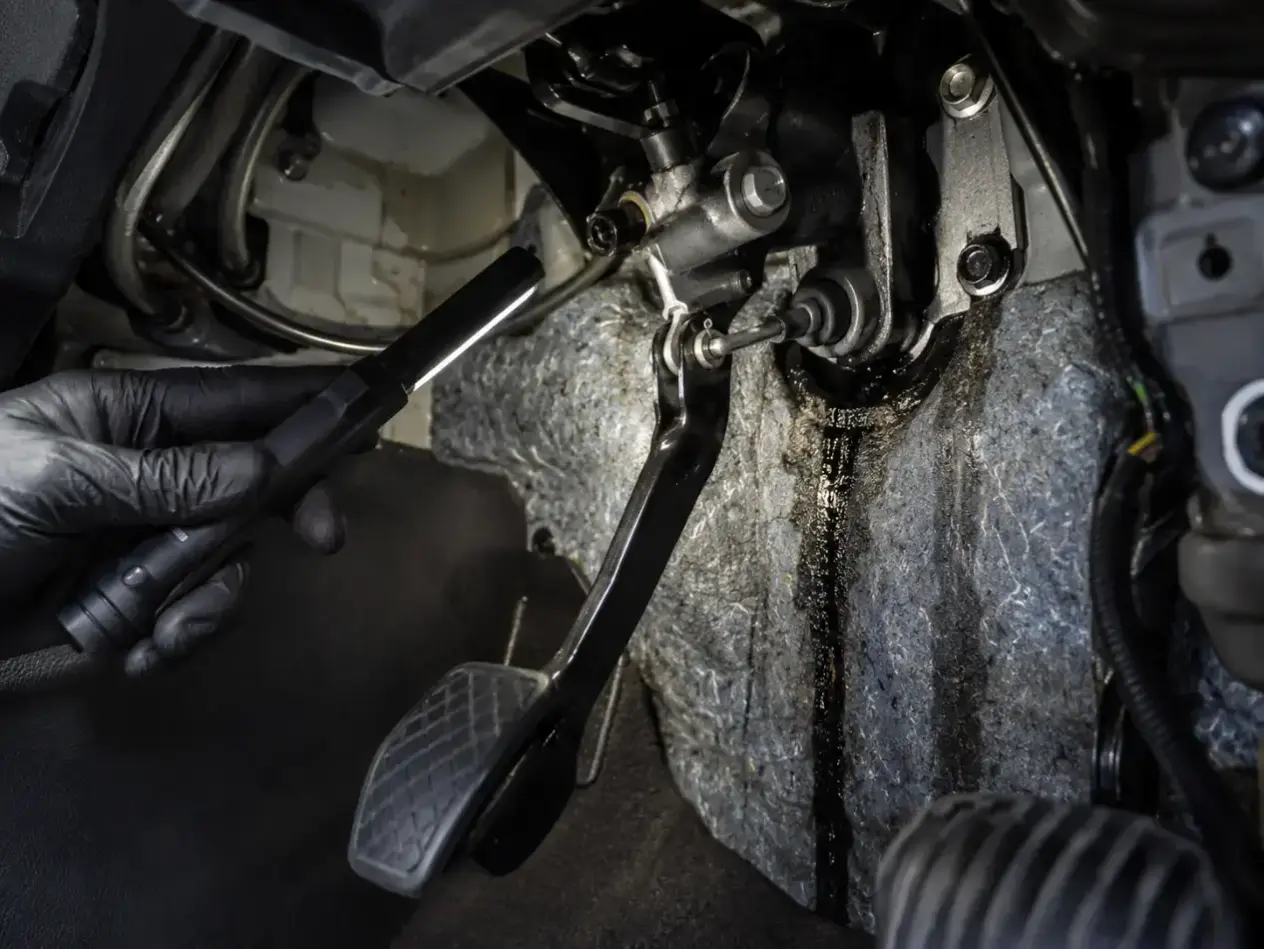
| If you notice a dark, oily wet spot staining your driver’s side interior floor carpet right around the top of the pedal linkage, your master cylinder is actively leaking fluid past its rear seal into the cabin. If you open your hood and notice that the fluid inside the small plastic reservoir is dark, murky, or completely black, the rubber lines are actively disintegrating internally, contaminating the system and jamming up the delicate internal check valves.
The Crucial Structural Alignment Process Post-Repair
Resolving a soft clutch pedal often requires unbolting or replacing lines directly around your front firewall and steering rack foundations. On certain modern front-wheel-drive import vehicles, accessing an integrated concentric slave cylinder requires our licensed mechanics to loosen structural engine mounts and slightly lower sections of the front suspension subframe to gain proper workspace clearance.
Because these structural chassis components are moved and re-torqued during reassembly, your vehicle’s front-end tracking geometry will shift slightly. To fully protect your mechanical investment, pairing this drivetrain repair with a precise computerized wheel alignment in Burnaby is a wise choice. Readjusting your steering linkages eliminates unexpected highway steering drift, minimizes rolling friction, and stops your front tires from scrubbing away their tread unevenly over the miles.
Comprehensive Auto Care Solutions at KMF Automotive
At KMF Automotive, we operate a full-service, independent mechanical workshop equipped to handle your vehicle’s entire maintenance ecosystem. Because our licensed technicians specialize in solving complex manual drivetrain issues, we can accurately evaluate your entire vehicle while resolving your hydraulic pedal faults, saving you extra trips to the shop later.
Our facility handles everything required to keep your automobile dependable, safe, and efficient. If your vehicle is approaching its next routine service window, we provide factory-approved, premium oil changes using top-tier synthetic lubricants to preserve engine longevity and protect your seals. If your dashboard check engine light is glowing, or if you notice an unusual squealing sound under hard braking, our comprehensive brake repair service in Burnaby will fully restore your stopping confidence.
We provide deep technical expertise across all major automotive platforms and comfort systems. From restoring crisp, icy airflow with an expert air conditioning service in Burnaby to tracking down complex mechanical faults, we handle it all. If your manual gearbox is fighting your inputs up steep hills, our specialized clutch repair service in Burnaby balances your power delivery. Furthermore, for high-mileage engines, booking a preemptive timing belt repair in Burnaby provides absolute insurance against catastrophic internal engine valve damage. We treat your vehicle with the exact level of precision and honesty we would give our own.
Restoring Direct Pedal Control and Peace of Mind
Driving a manual car with a soft or spongy clutch pedal is an incredibly stressful experience that will eventually leave you unable to disengage your gears at a busy intersection. Opting for a professional hydraulic diagnostic check, a complete fluid line bleed, or a fresh cylinder replacement completely removes air pockets and restores that firm, responsive, and tactile pedal feel you love. Trusting our experienced mechanics keeps your daily driving completely predictable, efficient, and stress-free.
Schedule Your Clutch System Diagnostic in Burnaby Today
Don’t wait for your spongy clutch pedal to go completely flat and leave you stranded on a busy Lower Mainland roadway. Our certified mechanics at KMF Automotive are fully equipped to accurately evaluate your manual transmission’s hydraulic circuit with upfront transparency and honest pricing.
Conveniently located at 7080 Macpherson Ave in Burnaby, BC (V5J 4N3), just a brief walk from the Royal Oak SkyTrain Station, we proudly serve local car owners across the Lower Mainland with exceptional automotive craftsmanship. Call our friendly local shop today at 604-438-0222 or contact us online to schedule your service appointment or drop by for an expert consultation.
Frequently Asked Questions: clutch pedal soft spongy Burnaby
What is the main difference between a wheel alignment and tire balancing?
A wheel alignment corrects the physical structural angles of your steering links and suspension components so that the tires roll perfectly parallel to each other and track straight. Our professional tire repair service in Burnaby incorporates wheel balancing, which utilizes tiny calibrated weights on the rim flange to counteract natural heavy spots within the spinning tire assembly, completely removing high-speed steering wheel vibrations.
Can I fix a spongy clutch pedal by just topping up the fluid?
Topping up a low fluid reservoir is a temporary band-aid, not a permanent fix. Because your clutch hydraulic circuit is a closed loop, the fluid level should never naturally drop. If the reservoir is low, it means fluid is actively escaping out of a failing master cylinder seal, a leaking slave cylinder boot, or a cracked line that requires mechanical replacement.
Why does my car grind gears when the clutch pedal feels soft?
When your pedal is spongy, the master cylinder cannot push enough fluid down the line to move the slave cylinder its full distance. Because the slave cylinder cannot press hard enough against the pressure plate, the clutch disc fails to fully separate from the spinning engine. When you try to shift, you are forcing gears to slam together while still under partial engine power, causing a loud mechanical grind.
How often should manual clutch hydraulic fluid be flushed?
As a standard maintenance best practice, your vehicle’s clutch fluid should be completely flushed and replaced every 2 to 3 years, or roughly every 40,000 to 60,000 kilometers. Brake fluid is naturally hygroscopic, meaning it absorbs moisture straight out of the atmosphere over time, leading to internal component corrosion and low fluid boiling points.
What is the average lifespan of a clutch master and slave cylinder?
Under normal daily driving conditions, a premium factory-grade clutch master or slave cylinder typically lasts between 100,000 and 150,000 kilometers. However, neglecting regular fluid flushes allows abrasive grit and moisture to build up inside the cylinders, which chews through the internal rubber seals and cuts their operational lifespan in half.
Is a spongy clutch pedal the same thing as a worn-out clutch disc?
No, they are completely separate problems. A worn-out clutch disc has thin friction material and causes the engine to rev high while the car struggles to accelerate, but the pedal under your foot will usually still feel firm. A spongy clutch pedal is strictly an issue with the external hydraulic fluid control system failing to build operating pressure.
Key Takeaways: clutch pedal soft spongy Burnaby
- The Air Factor: A soft, spongy pedal means atmospheric air has bypassed a seal and become trapped inside your closed hydraulic fluid lines.
- Cylinder Seal Failures: Fluid bypassing worn internal rubber seals inside either your master or slave cylinder results in an immediate loss of pedal operating pressure.
- Visual Leak Warnings: Check for dark fluid stains on your driver’s side interior carpet or active fluid drops weeping under the transmission bellhousing casing.
- Affordable Repair Windows: Addressing a hydraulic issue early avoids a full transmission teardown, keeping repair costs significantly lower than a full clutch friction disc job.
- Chassis Alignment Necessity: Because deep engine bay repairs often require unbolting structural engine mounts and subframe elements, a subsequent computerized alignment is highly recommended.
- Trusted Independent Craftsmen: Visiting an established local independent workshop gives you access to certified technicians, advanced line-bleeding systems, and transparent pricing.