A slipping or hard-to-engage clutch compromises your control on the road and can cause serious mechanical damage to your vehicle’s transmission. Mazda and Honda manual vehicles are famous for responsive driving, but continuous urban commuting in stop-and-go traffic takes a toll on their clutch systems. This comprehensive guide details common clutch issues, component failure signs, and why professional clutch replacement protects your daily commute.
What Controls the Lifespan of Your Mazda or Honda Clutch
Several key variables dictate how long the manual clutch assembly lasts in popular models like the Honda Civic, Honda Fit, Mazda 3, or Mazda MX-5 Miata. Frequent stop-and-go commuting in steep, hilly areas subjects friction plates to intense thermal loads. Riding the clutch pedal or holding the pedal down at red lights causes accelerated wear on release bearings. Additionally, aggressive high-RPM shifting breaks down friction material much faster than steady, progressive pedal engagement. If you want to review how complete drivetrain care maintains overall vehicle health, visit the KMF Automotive homepage for a full overview of our repair philosophies.
www.carclubs.org.uk
How to Spot Early Warning Signs of Clutch Failure
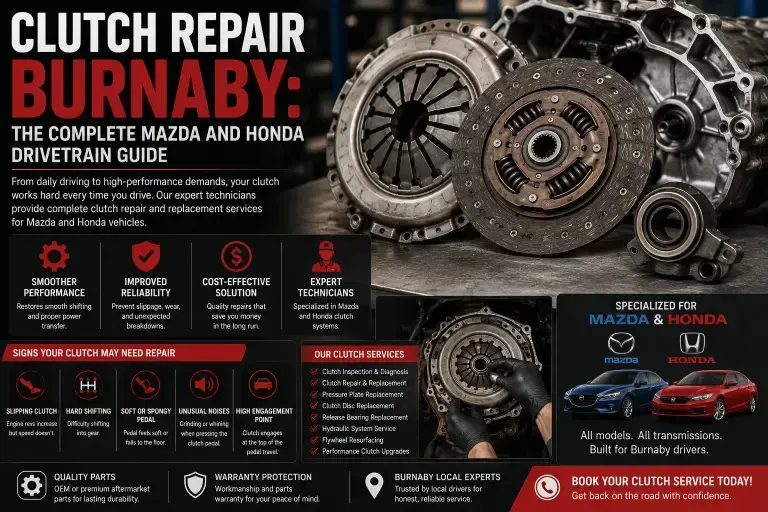
Catching manual transmission issues early prevents sudden breakdown and avoids expensive secondary damage to your transmission input shaft or engine flywheel.
FreightWaves
- Slipping Acceleration: Engine revs spike high when pressing the gas pedal, but your vehicle gains speed very slowly.
South Bend Clutch - Hard or Grinding Shifts: Shifting into gear—especially reverse or first—requires heavy force or produces metallic grinding noises.
- Spongy or Low Pedal Feel: The clutch pedal offers almost no resistance or stays resting near the floorboard.
- Burning Smell: A distinct, sharp chemical odor indicates overheating friction linings under heavy load.
Westside Auto
Recognizing Clutch Issues Specific to Honda and Mazda Models
Honda and Mazda manual transmissions rely on precise hydraulic actuation and lightweight friction components:
- Honda Hydraulic Clutch Master/Slave Failure: Honda models frequently utilize compact hydraulic master cylinders. Internal seal breakdown leads to soft pedal pressure or gear engagement issues before the friction disc fully wears out.
- Mazda Dual-Mass Flywheel & Release Bearing Wear: Modern Mazda vehicles often feature dual-mass flywheels designed for engine dampening. When replacing the clutch disc, replacing or properly resurfacing the flywheel assembly prevents unwanted chatter during acceleration.
Why Replacing Complete Clutch Kits Delivers Long-Term Reliability
Replacing only the worn friction disc while leaving aging surrounding hardware behind is a risky strategy. High-quality complete replacement assemblies, such as the Exedy OEM Replacement Clutch Kit for Honda or the ACT Performance Street Clutch Kit for Mazda, bundle a new pressure plate, clutch disc, release bearing, and pilot bearing together. Installing fresh components across the entire assembly ensures smooth pedal operation, optimal clamp force, and maximum durability.
Where Can You Get Certified Clutch Repair in Burnaby
You do not have to endure grinding shifts, slipping gears, or erratic pedal performance in your Mazda or Honda. Bringing your car to a trusted local garage ensures certified mechanics inspect your transmission, clutch hydraulics, and flywheel with absolute precision. Our team evaluates your vehicle’s shifting behavior, replaces worn components with OEM-spec hardware, and performs complete hydraulic line bleeding. Schedule a transparent diagnostic check and comprehensive auto repair services with our top-rated mechanical team today.
How to Extend the Longevity of Your Manual Drivetrain
Adopting mindful driving habits saves your vehicle from sudden mechanical failures and protects your wallet from premature garage visits:
- Avoid Resting Your Foot on the Pedal: Keep your left foot on the dead pedal when not actively changing gears to prevent slight pressure on the throwout bearing.
- Shift into Neutral at Stops: Disengage the clutch and rest in neutral with the brake pedal applied while waiting at traffic lights.
- Use the Parking Brake on Inclines: Avoid using the clutch friction point to hold your vehicle stationary on steep hills.
- Replace Clutch Fluid Regularly: Flush hydraulic clutch fluid every two years to prevent internal seal contamination.
Rely on Certified Technicians for Complete Automotive Care in Burnaby
Preserving the performance, safety, and long-term resale value of your vehicle demands verified mechanical expertise and quality replacement hardware. From routine fluid flushes and brake service to complex manual transmission rebuilding and clutch overhauls, choosing an established facility guarantees total reliability. The professional team at our top-rated auto repair shop in Burnaby focuses on delivering transparent pricing and quality workmanship to keep your car performing at its peak.
Contact Our Local Facility to Book Your Repair Appointment Today
Do not take unnecessary risks with grinding gears, slipping acceleration, or soft pedal feel that jeopardize your control on the road. Secure a fast, factory-approved solution that keeps your everyday commute stress-free and completely protects your automotive investment. Click over to our main digital booking portal right now to contact us and schedule your precision maintenance appointment today.
Frequently Asked Questions: clutch repair Burnaby Mazda Honda
How long does a clutch replacement take for a Honda or Mazda?
A complete clutch replacement typically takes between 4 and 8 hours of labor in a fully equipped auto repair facility. The job requires dropping the subframe or front transaxle, removing the transmission casing, inspecting the flywheel, and replacing all internal wear hardware before reassembling and road-testing.
Should I resurface or replace the flywheel during a clutch service?
Yes, you should always resurface a standard single-mass flywheel or replace a worn dual-mass flywheel during a clutch overhaul. Installing a fresh friction disc onto a glazed or warped flywheel surface results in severe clutch chatter, shuddering at takeoff, and premature wear.
What is the difference between a slipping clutch and a bad hydraulic cylinder?
A slipping clutch happens when the friction material is worn out, causing the engine to rev high without accelerating while the pedal is fully released. A bad hydraulic cylinder causes disengagement problems, making the pedal feel soft, sinking to the floor, or preventing you from shifting into gear smoothly.
BreakerLink
Can I drive my car if the clutch is slipping slightly?
Driving short distances to a repair shop is possible if the slip is mild, but continuing to drive with a slipping clutch generates extreme heat. This excessive heat can warp the engine flywheel and crack the pressure plate, turning a simple clutch replacement into a much higher repair bill.
What causes a high clutch pedal engagement point?
As the friction disc wears thinner over thousands of kilometers, the diaphragm spring on the pressure plate pushes outward, moving the pedal engagement point higher in its travel stroke. If your pedal engages near the very top of its movement, your disc is near the end of its functional life.
Why does my clutch pedal stay stuck on the floorboard?
A clutch pedal that remains stuck to the floorboard indicates a complete loss of hydraulic pressure, usually caused by a blown master cylinder seal, leaking slave cylinder, or a snapped clutch cable on older models. The vehicle should be towed to a service center for inspection.
Key Takeaways: clutch repair Burnaby Mazda Honda
- Address clutch slipping immediately to prevent severe friction damage to your engine’s flywheel
- High RPMs without matching acceleration signal a worn friction disc in Mazda and Honda manual vehicles
- Spongy pedal pressure points to hydraulic line leaks or failing master/slave cylinders
- Replacing the pressure plate, throwout bearing, and disc together ensures long-term reliability
- Professional technicians ensure proper alignment and factory-spec fluid bleeding