A failing clutch master cylinder directly compromises your transmission, preventing smooth gear engagement and creating serious road safety hazards. This comprehensive guide covers the critical warning signs of hydraulic system failure, how fluid leaks impact your pedal pressure, and why prompt clutch master cylinder replacement in Burnaby (click to open side panel for more information protects your entire drivetrain. Protect your vehicle investment and book a precision diagnostic check today.
What Controls the Lifespan of Your Clutch Master Cylinder
Understanding the structural role of the clutch master cylinder highlights why routine maintenance is essential. When you depress the clutch pedal, the master cylinder converts mechanical foot pressure into hydraulic pressure, pushing fluid through reinforced lines to actuate the slave cylinder and disengage the clutch pressure plate. Over time, extreme engine heat, continuous mechanical cycling, and moisture-laden fluid degrade the internal rubber seals. To explore how comprehensive drivetrain maintenance keeps your vehicle running smoothly, visit the KMF Automotive homepage for an overview of our certified service standards.
How to Recognize Warning Signs Demanding Clutch Master Cylinder Replacement Burnaby
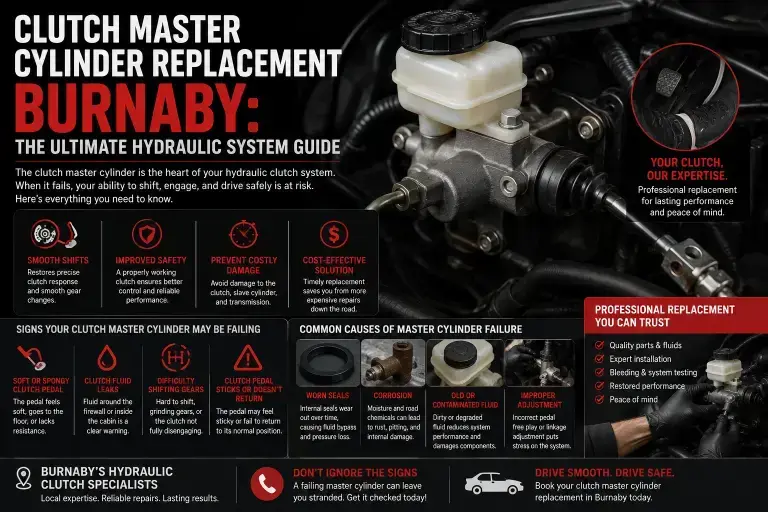
Detecting hydraulic failure early prevents complete pedal collapse and costly transmission damage on the road. When internal hydraulic pressure drops, your vehicle will exhibit distinct symptoms:
- Spongy or Soft Clutch Pedal: The pedal offers little resistance and feels unusually soft when depressed.
- Pedal Stuck to the Floorboards: The clutch pedal fails to return to its resting position, requiring you to lift it manually.
- Difficulty Engaging Gears: Shifting into reverse or first gear becomes sticky, accompanied by harsh grinding sounds.
- Low or Dark Hydraulic Fluid: Fluid in the reservoir appears dark, cloudy, or drops consistently without visible external hose damage.
Understanding Internal vs External Hydraulic Fluid Leaks
A clutch master cylinder can fail internally even if you do not notice liquid dripping onto your driveway. When the primary internal rubber plunger seals break down, pressurized fluid bypasses the piston inside the cylinder bore. This internal leakage causes an immediate loss of hydraulic pressure without losing fluid volume. Conversely, external leaks occur when external rod seals deteriorate, allowing fluid to seep down the interior firewall behind your clutch pedal assembly.
When Are Hydraulic Faults Too Complex for a DIY Driveway Repair
Replacing a clutch master cylinder involves working within cramped footwells and tight engine compartments, handling corrosive hydraulic fluid, and thoroughly bleeding the system. Air bubbles trapped inside the hydraulic line prevent full clutch disengagement, causing immediate gear grinding upon startup. Professional automotive facilities utilize specialized reverse-pressure bleeding equipment to purge air lock pockets completely and verify hydraulic line integrity under full operating load.
Why Replacing the Slave Cylinder and Fluid Concurrently Is Critical
When scheduling a clutch master cylinder replacement in Burnaby Click to open side panel for more information, technicians strongly recommend servicing the slave cylinder and flushing the hydraulic line simultaneously. Because both cylinders experience identical operational cycles and thermal stress, an aging slave cylinder often fails shortly after a new master cylinder restores full hydraulic pressure to the system. Installing fresh, high-grade fluid prevents residual grit and moisture from wearing down your new cylinder seals.
Where Can You Get Professional Clutch Master Cylinder Replacement in Burnaby
You do not have to endure stressful gear shifts, erratic pedal feel, or risk total power loss on your daily commute. Bringing your vehicle to an established local facility ensures certified technicians accurately diagnose your hydraulic clutch assembly and replace worn components using OEM-spec hardware. Our team performs thorough pressure checks, replaces leaking cylinders, and bleeds lines to ensure factory-level pedal feel. Schedule a transparent diagnostic evaluation and complete auto repair services with our top-rated mechanical team today.
How to Maximize the Lifespan of Your Hydraulic Clutch System
Adopting proactive driving and maintenance habits significantly reduces wear on your clutch hydraulic components. Avoid resting your foot lightly on the clutch pedal while driving, as continuous pressure keeps internal seals under constant load. Have your clutch hydraulic fluid flushed every two years to remove moisture accumulation and micro-metallic particles. Keeping your engine bay clean also prevents road grime from degrading external dust boots and seals.
Rely on Certified Technicians for Complete Automotive Care in Burnaby
Preserving the performance, safety, and long-term value of your vehicle demands verified mechanical expertise and quality replacement hardware. From routine fluid maintenance and brake overhauls to complex transmission diagnostics and hydraulic clutch repairs, choosing a trusted facility guarantees total peace of mind. The professional team at KMF Automotive Ltd Click to open side panel for more information in Burnaby Click to open side panel for more information focuses on delivering transparent pricing and quality workmanship to keep your car operating at its peak.
Contact Our Local Facility to Book Your Repair Appointment Today
Do not take unnecessary risks with a soft clutch pedal, gear grinding, or hydraulic leaks that jeopardize your control on the road. Secure a fast, factory-approved solution that keeps your everyday commute stress-free and protects your vehicle investment. Click over to our main digital booking portal right now to contact us and schedule your precision service appointment today.
Frequently Asked Questions: clutch master cylinder replacement Burnaby
Can I drive my car with a failing clutch master cylinder
No, driving with a failing clutch master cylinder is extremely unsafe. If the cylinder loses pressure completely while driving, you will be unable to disengage the clutch to change gears or bring the vehicle to a controlled stop, creating an immediate collision risk.
How long does a clutch master cylinder replacement service take
A standard clutch master cylinder replacement typically takes between 2 to 4 hours in a fully equipped auto repair shop. This includes removing the old assembly, installing the new cylinder, bench-bleeding the unit, flushing fresh fluid through the lines, and road-testing the vehicle.
What causes a clutch master cylinder to fail prematurely
The leading cause of premature failure is contaminated or aged hydraulic fluid. Over time, brake fluid absorbs atmospheric moisture, lowering its boiling point and causing internal rust and pitting along the cylinder bore, which rapidly tears the rubber piston seals.
Is brake fluid used in the clutch master cylinder system
Yes, the vast majority of manual transmission vehicles utilize standard DOT 3 or DOT 4 brake fluid inside the clutch hydraulic system. Always consult your vehicle owner’s manual to ensure the correct fluid specification is used during maintenance.
What is the difference between a clutch master cylinder and a slave cylinder?
The clutch master cylinder is connected directly to your clutch pedal and generates hydraulic pressure when depressed. The slave cylinder receives that pressurized fluid through a hydraulic line and physically moves the clutch release fork to disengage the pressure plate.
Will a new clutch master cylinder fix a slipping clutch
No, a new master cylinder fixes hydraulic disengagement problems, such as a soft pedal or difficulty shifting into gear. If your clutch slips under acceleration while the pedal is fully released, the issue lies within the worn friction disc or pressure plate inside the transmission bellhousing.
Key Takeaways: clutch master cylinder replacement Burnaby
- A spongy or floor-sinking clutch pedal is the primary indicator of internal hydraulic seal breakdown
- Never drive with a failing master cylinder, as it leads to gear grinding and transmission synchronizer damage
- Contaminated hydraulic brake fluid erodes rubber piston seals from the inside out
- Replacing the master cylinder and slave cylinder concurrently ensures complete system reliability
- Booking a certified local facility guarantees precise pressure bleeding and warrantied mechanical care