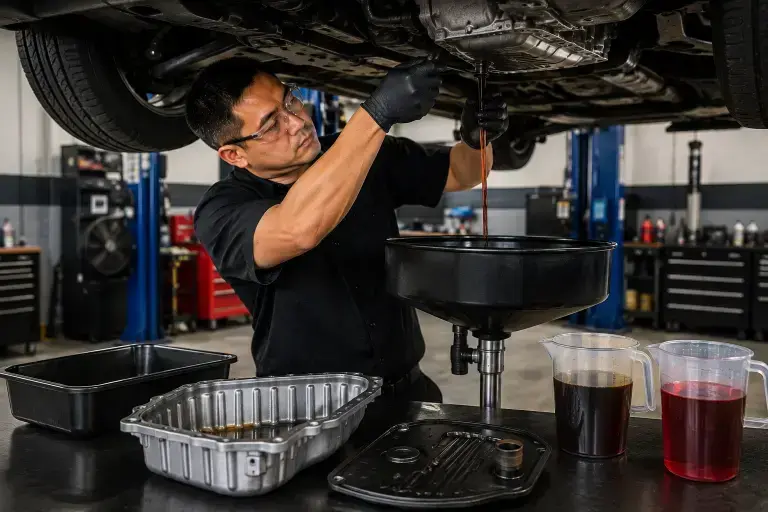
Your vehicle’s transmission relies on clean, high-grade fluid to cool moving gears, regulate hydraulic pressure, and prevent severe mechanical friction. Over time, heat and severe city driving degrade this fluid, leading to gear slipping, delayed engagement, and costly transmission failure. This comprehensive guide details key warning signs, replacement schedules, the difference between a drain-and-fill versus a flush, and where to book a certified transmission fluid change in Burnaby.
What Factors Dictate How Often You Need a Transmission Fluid Change in Burnaby
Several critical factors influence how quickly transmission fluid degrades inside your vehicle’s gearbox. Driving habits play a massive role—frequent stop-and-go city commuting, climbing steep Burnaby hills, and towing heavy loads create high thermal stress that bakes transmission fluid. Vehicle age and transmission type (automatic, manual, or CVT) also alter service timelines. Continuously Variable Transmissions (CVTs), for instance, require strict fluid replacement intervals every 60,000 to 80,000 kilometers to protect delicate push-belts and pulleys. To review how fluid care impacts overall vehicle safety, visit the KMF Automotive homepage for a full overview of our certified maintenance standards.
How to Recognize Early Warning Signs of Transmission Fluid Degradation
Catching transmission fluid breakdown early prevents minor shifting glitches from escalating into multi-thousand-dollar gearbox replacements:
- Rough or Delayed Shifting: The transmission hesitates before engaging gears or shifts with a harsh clunking motion.
- Slipping Gears: Engine RPMs spike high during acceleration without a corresponding increase in speed.
- Burning Chemical Odor: Overheated fluid loses its lubricating abilities and emits a sharp, acrid burning smell.
- Dark or Opaque Fluid: Healthy automatic transmission fluid is translucent red; dirty fluid appears dark brown or black.
- Red Fluid Leaks Underneath: Liquid pooling under your vehicle indicates a compromised oil pan gasket or drive shaft seal.
Understanding Transmission Fluid Change vs. Full Transmission Flush
Knowing the difference between a fluid exchange and a complete system flush helps you choose the right service:
- Transmission Fluid Change (Drain & Fill): Drains old fluid from the transmission pan, replaces the internal sump filter/screen, and refills fresh fluid. This process replaces 40% to 60% of total fluid volume safely without disturbing internal sludge in high-mileage vehicles.
- Transmission Fluid Flush: Uses specialized shop equipment to force fresh fluid through the entire cooling line and torque converter, replacing 100% of the old fluid. A flush is ideal for well-maintained or newer vehicles.
When Are Transmission Symptoms Too Severe to Ignore
Driving with severely degraded transmission fluid is one of the quickest ways to ruin a gearbox. As fluid breaks down, internal friction plates lose their hydraulic grip and grind against each other, generating fine metal shavings. If your transmission pops out of gear while driving, struggles to engage reverse, or triggers an active check engine light, delaying service can lead to total valve body failure. Immediate diagnostic care is essential to salvage internal components before a complete rebuild becomes necessary.
Why Professional Multi-Point Inspections Outperform Simple Driveway Drains
Performing a quick fluid drain in a residential driveway carries significant risks. Modern transmissions often lack traditional dipsticks, requiring specialized scan tools to verify fluid temperature and exact fill levels. Certified technicians do not just refill fluid; they drop the pan to inspect magnetic drain plugs for excessive metal debris, replace worn pan gaskets, and verify that the exact OEM fluid viscosity is used. Using incorrect fluid specifications can ruin internal clutches within miles.
Where Can You Get Professional Transmission Fluid Change in Burnaby
You do not have to guess about your transmission health or risk severe gearbox damage on your daily commute. Bringing your car to a trusted local facility ensures certified mechanics inspect your fluid level, filter screen, and hydraulic pressure with absolute precision. Our experienced team uses high-quality, manufacturer-approved fluids to eliminate gear slipping and protect your transmission lifespan. Schedule a comprehensive diagnostic check and auto repair services with our top-rated mechanical team today.
How to Protect Your Transmission and Extend Fluid Lifespan
Adopting proactive driving and maintenance habits keeps your drivetrain performing smoothly between service intervals:
- Avoid Extreme Acceleration When Cold: Allow your engine and transmission to reach normal operating temperature before driving aggressively.
- Never Shift Between Drive and Reverse While Moving: Always bring your vehicle to a complete stop before switching gears to prevent severe mechanical shock to gear teeth.
- Inspect Under-Car Gaskets Periodically: Check for slow fluid seeps around the transmission oil pan during routine engine oil changes.
- Service Your Cooling System: A failing radiator causes engine overheating, which directly cooks your transmission fluid through shared heat exchangers.
Rely on Certified Technicians for Complete Automotive Care in Burnaby
Preserving the performance, safety, and long-term resale value of your vehicle demands verified mechanical expertise and quality replacement hardware. From routine fluid maintenance and brake overhauls to complex transmission diagnostic checks and engine repair, choosing an established facility guarantees total reliability. The professional team at our top rated auto repair shop in Burnaby focuses on delivering transparent pricing and quality workmanship to keep your car performing at its peak.
Contact Our Local Facility to Book Your Repair Appointment Today
Do not take unnecessary risks with slipping acceleration, clunking gear shifts, or fluid leaks that jeopardize your control on the road. Secure a fast, factory-approved solution that keeps your everyday commute stress-free and completely protects your automotive investment. Click over to our main digital booking portal right now to contact us and schedule your precision maintenance appointment today.
Frequently Asked Questions: transmission fluid change Burnaby
Is transmission fluid really lifetime fluid
No, “lifetime fluid” is a marketing term used by manufacturers to describe the duration of the factory warranty window, not the actual lifespan of the vehicle. Over tens of thousands of kilometers, heat and mechanical shear forces break down fluid viscosity, making routine fluid replacement essential for long-term engine and transmission survival.
How long does a professional transmission fluid change take
A standard professional transmission fluid change and filter replacement takes between 1 to 2 hours in a fully equipped automotive repair shop. The timeline allows technicians to cool the vehicle, drain the pan, inspect magnetic residue, install a new gasket and filter, refill with OEM-spec fluid, and complete a road test.
What happens if I put the wrong transmission fluid in my car
Using the wrong transmission fluid specification can cause severe internal damage, including clutch slippage, delayed shifting, seal swelling, and complete hydraulic pressure loss. Always consult your owner manual or have a certified technician supply factory-approved fluids.
Can changing transmission fluid fix a slipping transmission
If gear slippage is caused by low fluid level or mild thermal degradation, a fluid change can restore proper hydraulic pressure and smooth shifting. However, if internal friction plates are physically worn away or valve bodies are damaged, a fluid change will not repair mechanical wear and a component overhaul may be required.
How often should you check your transmission fluid level
You should have your transmission fluid level and quality checked at every second oil change, or roughly every 10,000 to 15,000 kilometers. If your vehicle features a sealed transmission without a dipstick, a technician must inspect it from underneath while elevated on a hoist.
What color should clean transmission fluid be
Fresh automatic transmission fluid (ATF) is typically translucent bright red or pink, allowing easy identification of leaks. Continuously Variable Transmission (CVT) fluid is often clear or light amber. If fluid turns dark brown, black, or milky (indicating coolant contamination), it requires immediate mechanical evaluation.
Key Takeaways: transmission fluid change Burnaby
- Schedule a transmission fluid inspection every 50,000 to 100,000 kilometers based on manufacturer guidelines
- Dark, burnt-smelling fluid indicates severe thermal degradation and requires immediate replacement
- Frequent stop-and-go commuting in Burnaby accelerates transmission fluid contamination and heat stress
- Replacing degraded transmission fluid removes microscopic metal shavings before they ruin gear teeth
- Booking a certified technician guarantees exact fluid specification matching and pan gasket inspections