At a professional, independent automotive workshop, a standard oil and filter change takes between 30 to 45 minutes. If you visit a dedicated drive-through quick-lube establishment, the actual physical process can drop to roughly 15 to 20 minutes, while a mainstream franchise dealership showroom typically requires 1 to 2 hours due to high vehicle volume and paperwork processing. However, a proper service involves much more than just pulling a drain plug; it includes a multi-point safety inspection to protect your engine’s longevity.
The Realistic Timeline Breakdown by Facility Type
The total amount of time you will spend waiting for your vehicle depends heavily on the business model of the automotive facility you choose:
Drive-Through Quick Lube (15 to 20 Minutes)
These facilities are built purely for assembly-line speed. Technicians work in pits below the vehicle to drain your fluid rapidly while an upper technician fills the engine crankcase. While convenient, these operations generally bypass comprehensive vehicle safety checks.
Independent Full-Service Workshops (30 to 45 Minutes)
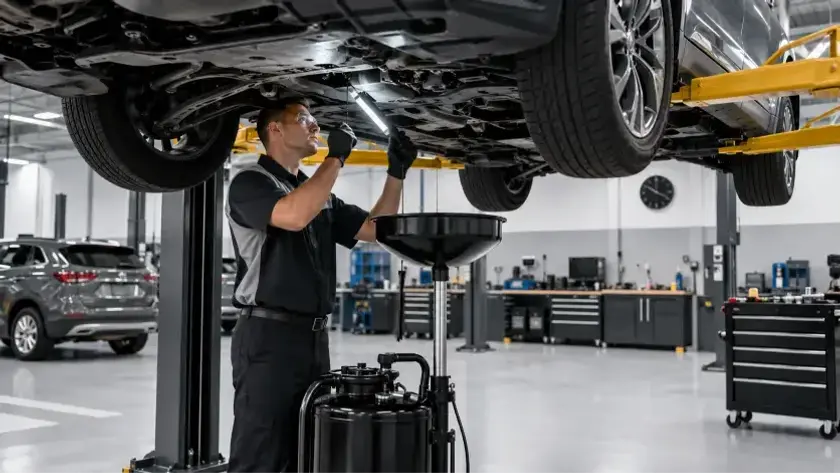
An independent mechanic prioritizes a balanced approach. They lift your vehicle completely off the ground to thoroughly inspect the underlying steering joints, suspension bushings, and brake pads while the old engine oil drains completely.
Franchise Dealerships (1 to 2+ Hours)
Because dealerships juggle massive fleets of vehicles, warranty claims, and extensive service queues, your vehicle will spend quite a bit of time simply waiting for a designated service bay to open up.
What Actually Happens During Those 30 Minutes?
A reputable mechanical facility follows a highly strategic protocol to ensure your engine is properly lubricated and monitored:
- Staging and Setup (5 Mins): The technician drives the vehicle onto a heavy-duty commercial hoist, sets the physical lifting pads beneath the structural frame rails, and raises the vehicle to working height.
- The Gravity Drain (10 Mins): The metal oil pan drain plug is unscrewed, allowing the old, saturated oil to empty into a rolling disposal cart. Allowing the oil to fully drain via natural gravity takes a few minutes but ensures carbon debris is cleared out.
- Filter Extraction and Replacement (5 Mins): The saturated oil filter is removed. The technician cleans the mounting plate, applies a fresh layer of clean oil to the new filter’s rubber O-ring seal to prevent binding, and spins on the replacement filter to exact factory torque specifications.
- Underbody Inspection (10 Mins): While the oil is draining, a licensed technician uses a high-powered work light to inspect your brake pad linings, steering tie rods, rubber CV axle boots, and tire wear patterns.
- Fluid Replenishment and Digital Reset (5 Mins): The vehicle is lowered, clean engine oil is poured into the engine to the precise dipstick line, and the dashboard’s internal digital maintenance light is recalibrated to 100%.
Common Variables That Can Delay Your Service
Sometimes an oil change takes longer than the standard 30-minute estimate due to specific vehicle features or underlying maintenance issues:
- Aerodynamic Underbody Splash Shields: Many modern vehicles are completely sealed from underneath with plastic or fiberglass skid plates designed to maximize fuel efficiency. Removing up to a dozen rusted, seized fasteners to access the oil filter can add 10 to 15 minutes to the job.
- Specialized European Engineering: Vehicles manufactured by European brands (such as BMW, Audi, Mercedes-Benz, or Volkswagen) utilize complex cartridge-style filter housings located underneath specialized air intakes. They also require highly precise factory-spec oil types, demanding extra care.
- Stuck or Stripped Hardware: If a previous quick-lube facility over-tightened your drain plug using an impact gun, your mechanic must carefully extract the damaged plug without ruining the threads on your aluminum oil pan.
The Crucial Mechanical Inspection and Steering Linkage Connection
The time your car spends on a hoist during an oil change is highly valuable. Because your technician must completely raise the vehicle and remove underbody shield arrays, it provides an ideal window to look closely at moving steering joints, sway bar links, and tire structures.
If our multi-point visual safety check reveals that your front tires are scrubbing down their rubber unevenly, pairing your routine fluid swap with a computerized wheel alignment is an excellent preventative choice. Re-centering your vehicle’s tracking angles back to factory specifications eliminates steering wheel drift, maximizes fuel efficiency, and prevents you from having to purchase new tires prematurely.
Full-Service Automotive Excellence
Maintaining your automobile requires viewing the vehicle as a fully integrated ecosystem. Bringing your car into an independent workshop for an oil service opens up a highly efficient window to address other pending maintenance tasks without paying for overlapping diagnostic visits.
A premium repair workshop floor handles everything required to keep your automobile dependable and safe. If your rear wheels are omitting an unusual scraping sound, a precise brake repair service will fully restore your stopping confidence. If your car is suffering from electrical issues, certified mechanics can confidently diagnose what is triggering an ABS light or check engine alert.
From restoring crisp, ice-cold airflow with an expert air conditioning service to tracking down complex mechanical faults, comprehensive care saves time. If your manual gearbox is fighting your gear inputs up steep inclines, a specialized clutch repair balances your power delivery. Furthermore, for high-mileage engines, booking a preemptive timing belt repair provides absolute insurance against catastrophic internal engine valve damage.
Complete Control and Everyday Peace of Mind
Stretching out your maintenance windows or skipping oil changes entirely because you are short on time leaves your vehicle highly vulnerable to accelerated internal wear, carbon sludge buildup, and expensive timing chain failures. Investing less than an hour for a professional fluid and filter change completely removes the risk of contamination, keeps your powertrain running smoothly, and ensures your daily commutes remain efficient and stress-free.
Frequently Asked Questions: how much is an oil change
What is the main difference between a wheel alignment and tire balancing?
A wheel alignment corrects the underlying mechanical angles of your steering links and suspension components so that your tires roll parallel to each other and track straight. A professional tire repair service incorporates wheel balancing, which places small weights along the rim flange to correct natural heavy spots within the spinning rubber assembly itself, entirely removing high-speed steering vibrations.
Do I need to book an appointment for an oil change, or can I just walk in?
While some quick-lube shops accept walk-ins, booking an appointment at an independent shop ensures your service bay and technician are reserved specifically for you. This allows you to get in and out within the promised 30-to-45-minute window without waiting behind other vehicles.
Can I wait in the lobby while my oil change is being completed?
Yes, absolutely. Most independent repair shops feature clean, comfortable waiting areas with complimentary Wi-Fi and coffee so you can comfortably work or relax while your vehicle’s fluid service and multi-point inspection are being completed.
Why do European cars take longer to get an oil change?
European models often feature intricate engine bays that require removing plastic intake ducts, structural reinforcing bars, or extensive aerodynamic belly pans just to access the oil filter. Additionally, reset procedures for European onboard computers often require specialized diagnostic scan tools.
Is a multi-point inspection automatically included with an oil change?
At a high-quality independent repair facility, a visual multi-point safety inspection is standard practice with every oil change. Technicians check your fluid levels (coolant, brake fluid, steering fluid), tire pressures, lights, and underlying suspension joints as part of the safety framework.
How long can I safely drive past my oil change due date?
It is highly recommended not to exceed your oil change interval by more than 500 to 1,000 kilometers. Driving past your milestone means you are running engine components on broken-down, thin lubricant that has lost its protective additives, accelerating internal friction wear.
Key Takeaways: how much is an oil change
- The Baseline Timeline: Expect a proper, full-service oil change at an independent mechanical shop to take between 30 to 45 minutes.
- Quick Lube vs. Full Workshop: Quick lubes are faster (15-20 minutes) but skip essential deep underbody chassis and safety inspections.
- The Filter Requirement: Always replace the oil filter simultaneously with the fluid; a proper filter swap is key to keeping the new oil clean.
- Watch for Delays: Extensive plastic underbody aerodynamic shields or complex European engine layouts can add 10 to 15 minutes to the process.
- Chassis Geometry Alignment Link: Lifting your car for an oil service is the perfect time to evaluate suspension joints, making a steering alignment highly efficient if uneven tire wear is discovered.
- Dealer Quality, Independent Price: Booking your service with an established local independent facility guarantees factory-approved parts, certified mechanics, and completely transparent turnaround times.