Yes, a wheel alignment is absolutely necessary. Skipping this routine service is one of the fastest ways to turn an inexpensive vehicle maintenance check into a massive financial headache. When your suspension tracking is misaligned even by a fraction of a degree, your tires no longer roll smoothly forward; instead, they literally drag sideways down the road. Within a few thousand miles, this continuous friction permanently destroys your expensive tire tread, forces your engine to burn more fuel, and creates a constant steering pull that compromises your driving safety.
The High Cost of Skipping Your Alignment
Many drivers wonder if an alignment is just an optional upsell. To understand why it is a mechanical necessity, it helps to look at exactly what happens to your vehicle when you drive with skewed steering links:
1. Accelerated Tire Destruction
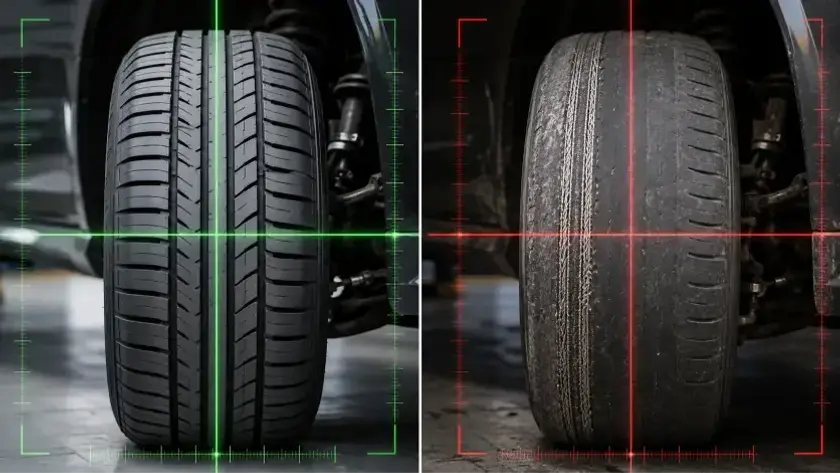
Tires are engineered to wear down evenly across their flat center tread over several years. When your suspension angles ($Camber$ or $Toe$) are out of spec, the vehicle’s weight is shoved onto a single edge of the tire. This quickly shaves away the rubber, exposing the underlying steel belts and ruining a brand-new set of tires in a fraction of their expected lifespan.
2. Dropping Fuel Economy
When your front tires are pigeon-toed or flaring outward, they are constantly fighting each other for directional control. This massive increase in rolling resistance requires your engine to work significantly harder just to maintain a steady highway speed, noticeably draining your fuel tank.
3. Compromised Driver Safety
A misaligned vehicle does not track straight. You have to apply constant counter-pressure to the steering wheel just to stop the car from drifting into the next lane or off the shoulder. In sudden emergency braking situations or wet weather, a crooked suspension reduces your overall road grip, increasing your stopping distances.
When Is an Alignment Unquestionably Mandatory?
While an annual tracking check is excellent preventive insurance, there are two specific scenarios where booking a computerized alignment is completely non-negotiable:
- Immediately After Installing New Tires: Putting fresh, expensive rubber onto a vehicle with a misaligned suspension will immediately start ruining the new tread on your drive home. Most tire manufacturers will actually void your treadwear warranty if you cannot prove the vehicle was properly aligned when the tires were mounted.
- Following Steering or Suspension Repairs: If a mechanic replaces your worn-out tie rods, control arms, ball joints, or struts, the physical geometry under your chassis is completely altered. An alignment is mandatory to calibrate those new parts back to original factory blueprints.
The Routine Fluid Maintenance Connection
Because diagnosing suspension geometry requires elevating your vehicle onto a flat drive-on lift or open hoist, it shares a highly efficient relationship with your scheduled fluid changes.
When you drop by an independent garage for a routine engine oil change or a preventative transmission fluid exchange, the technician will raise the chassis. This open view allows them to run a quick tire tread check across the inner shoulders of your rubber. Catching a skewed tracking profile early during an oil service lets you combine your maintenance tasks, protecting your vehicle’s footprint without forcing you to schedule multiple shop visits.
Full-Service Automotive Reliability
Your vehicle functions as a fully integrated mechanical network. If you frequently drive over rough roads that knock your tracking out of place, it is highly common for other steering, braking, and underbody components to experience accelerated stress.
A premier, independent repair workshop covers everything required to keep your automobile dependable and safe. If hitting a pothole severely threw off your steering geometry while damaging a wheel speed sensor, licensed technicians can accurately diagnose the exact fault triggering an ABS light or check engine alert. If that same impact caused uneven brake pad wear or warped a rotor, a comprehensive brake repair service will fully restore your stopping confidence.
From restoring crisp, icy airflow with an expert air conditioning service to tracking down complex mechanical faults, comprehensive care saves time. If your manual transmission or torque delivery feels loose following an underbody hit, a specialized drivetrain or clutch repair balances your power delivery. Furthermore, for high-mileage engines, booking a preemptive timing belt repair provides absolute insurance against catastrophic internal engine valve damage.
Restoring True Tracking and Total Peace of Mind
Allowing your steering links to operate out of factory spec leaves your vehicle vulnerable to rapid tire degradation, poor fuel tracking efficiency, and fatigue from constantly fighting a pulling steering wheel. Entrusting your vehicle to a professional laser alignment bay completely removes mechanical stress from your chassis, centers your steering wheel, and guarantees your daily commutes remain smooth, efficient, and perfectly controlled.
Frequently Asked Questions: is wheel alignment necessary
What is the main difference between a wheel alignment and tire balancing?
A wheel alignment corrects the underlying mechanical angles of your steering links and suspension components so that your tires roll parallel to each other and track straight. A professional tire repair service incorporates wheel balancing, which places small weights along the rim flange to correct natural heavy spots within the spinning rubber assembly itself, entirely removing high-speed steering vibrations.
How often should an alignment be checked if I don’t notice any symptoms?
As a standard preventive baseline, you should have your wheel alignment checked once a year or every 10,000 to 15,000 miles (15,000 to 25,000 km). Minor alignment drift happens slowly over time due to normal bushing wear, meaning your tracking could be causing hidden tire damage before you actively feel it in the steering wheel.
Will a bad alignment cause my steering wheel to shake?
No, a bad alignment typically causes a distinct physical pull to one side or causes your steering wheel to sit crooked when driving straight. Rhythmic shaking or vibration in the steering wheel at highway speeds is almost always a classic symptom of unbalanced tires or a bent wheel rim.
Can an alignment fix a clunking noise when I drive over speed bumps?
No. An alignment is strictly an adjustment of the suspension angles. If your vehicle is actively making clunking, popping, or groaning noises, it means a mechanical component like a ball joint, control arm bushing, or sway bar link is physically broken or worn out. Those parts must be replaced before an alignment can be performed.
How long can I drive on a vehicle that needs an alignment?
While the car will remain drivable, you should avoid stretching it out for more than a few weeks. Depending on how severely your toe or camber angles are skewed, a bad alignment can completely bald a perfectly good tire and expose its internal wires in less than a thousand miles of highway driving.
Is a four-wheel alignment always necessary, or is a two-wheel alignment fine?
A two-wheel (front-end) alignment is generally only acceptable for older trucks or rear-wheel-drive cars that feature a solid, non-adjustable rear axle. The vast majority of modern all-wheel-drive vehicles, crossovers, front-wheel-drive sedans, and SUVs feature independent rear suspensions that require a full four-wheel alignment to handle safely.
Key Takeaways: is wheel alignment necessary
- An Absolute Necessity: Skipping an alignment quickly ruins expensive tire tread, lowers fuel efficiency, and compromises your emergency handling.
- Protect Your Investment: Always pair an alignment check with the installation of fresh tires to keep from voiding your treadwear warranties.
- Mandatory Post-Repair Step: Resetting your suspension geometry is mandatory whenever you replace steering components like tie rods or struts.
- Schedule Annually: Aim to have your tracking verified once a year or every 10,000 to 15,000 miles as a core preventive measure.
- The Fleet Maintenance Connection: Inspecting your alignment parameters during a routine oil change or transmission service is the most efficient way to maximize tire longevity.
- Independent Facility Accuracy: Relying on an established independent shop ensures access to advanced laser calibration equipment, certified technicians, and clear, competitive pricing.