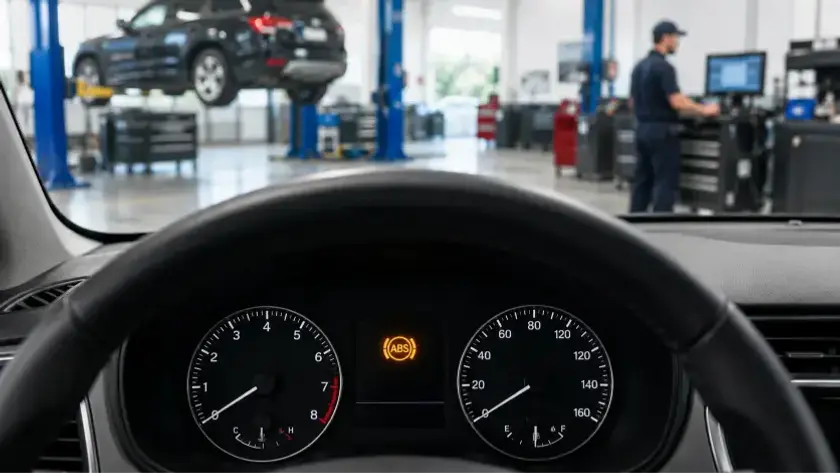
When your vehicle’s ABS (Anti-lock Braking System) light turns on, it means the computer has detected a fault in its safety framework and has temporarily deactivated your emergency anti-skid controls. Your vehicle will still slow down using normal mechanical brakes, but your wheels will lock up and slide if you stomp on the pedal during a panic stop or on slick roads. If both the ABS light and the primary Brake warning light turn on simultaneously, your vehicle is unsafe to drive and must be towed immediately. At KMF Automotive, diagnosing an ABS fault with a digital scan tool takes under an hour. Contact our team today to find the exact wheel sensor or wiring issue triggering your light.
The Safety Net What is the Anti-Lock Braking System?
To understand why your ABS light is on, you first need to understand the critical safety job this system performs every time you drive. In older vintage vehicles, stomping hard on the brakes during an emergency would instantly lock the wheels, causing the tires to slide helplessly across the pavement. When your wheels stop spinning, you completely lose the ability to steer the vehicle.
Modern Anti-lock Braking Systems solve this problem by acting as an electronic safety net. The system continuously monitors how fast your wheels are spinning.
[ SIf you slam on the brakes on a wet road, the ABS computer senses that the wheels are about to stop spinning. It instantly steps in, pulsing the hydraulic brake valves open and closed up to 15 times per second. This rapid pumping action prevents the tires from locking up, allowing you to retain full steering control so you can safely drive around an obstacle while slowing down.
Common Triggers That Turn the ABS Light On
Your vehicle’s anti-lock braking system relies on a network of sensors, wiring, and hydraulic valves working perfectly together. If any single component sends an unexpected signal to the main computer, the dashboard light will instantly switch on.
The most common real-world causes include:
1. Failing Wheel Speed Sensors
Every individual wheel hub on your car has a small electronic wheel speed sensor positioned right next to a spinning magnetic ring. These sensors constantly tell the computer exactly how fast each tire is moving. Because these sensors are mounted directly behind your brake rotors, they are continuously exposed to road grime, heavy rain, mud, and metallic brake dust. Over time, magnetic debris can coat the sensor face, or rock impacts can crack the plastic casing, breaking the data stream.
2. Damaged Electrical Wiring Harnesses
The thin wires connecting your wheel speed sensors to the main chassis run along your moving suspension control arms. Every time you drive over a pothole or turn the steering wheel, these wires flex. Over thousands of kilometers, this constant movement can cause the internal copper wires to fray, crack, or pull out of their weather-sealed electrical connectors, shorting out the circuit.
3. A Low Brake Fluid Reservoir
On many vehicle platforms, the main hydraulic fluid reservoir is shared between your standard brakes and the ABS pump module. If your brake pads wear down excessively, or if you develop a fluid leak, the oil level inside the reservoir will drop. If it falls past a critical threshold, it will trigger the dashboard warning light to alert you to a systemic pressure risk.
4. A Faulty ABS Hydraulic Pump or Module
The heart of the system is a specialized electronic control unit bolted to a hydraulic pump block containing multiple tiny internal valves. If the electric pump motor burns out, or if old, dirty fluid creates internal sludge that jams one of the safety valves, the computer will log a hard system failure code.
Is It Safe to Drive with the ABS Light On?
Whether your vehicle is safe to operate depends entirely on exactly which lights are illuminated on your dashboard cluster:
+Case A: Only the ABS Light is On
If your standard brake system light is off, but the amber ABS light is glowing, your vehicle is safe to drive carefully to a professional repair facility. Your standard mechanical brakes will still stop the car normally. However, you must remember that your emergency anti-skid system is completely offline. If you have to slam on the brakes on a rain-slicked highway, your wheels will lock up, and your vehicle may slide.
Case B: The ABS Light AND the Red Brake Warning Light are Both On
If both dashboard lights turn on simultaneously, your vehicle is unsafe to drive. This double warning indicates a severe, systemic mechanical failure, such as a major hydraulic pressure drop, a dangerously low fluid level, or a complete failure of your electronic brake force distribution. Driving the vehicle in this state risks complete brake pedal failure. Pull over safely and call a tow truck immediately.
How Mechanics Diagnose and Fix the Problem
Trying to diagnose an ABS issue at home by guessing or visually inspecting parts is incredibly difficult because you cannot see electronic signals.
When you bring your car to KMF Automotive, our licensed mechanics use a professional digital diagnostic scan tool plugged directly into your car’s OBD-II computer port.
This scanner talks directly with the ABS computer, instantly pulling the specific diagnostic trouble code (DTC) stored in the memory. The code will tell our technicians exactly where the breakdown is occurring—such as a “Left Rear Wheel Speed Sensor Sensor Circuit Fault.” Once we know the exact location, we can inspect the wiring, replace the broken part, flush out old fluid, and clear the dashboard light with complete factory precision.
The Suspension Teardown and Alignment Process
Replacing a broken wheel speed sensor or a damaged wheel hub assembly requires our technicians to work directly within your vehicle’s steering knuckles and suspension layout. To remove old components, we must unbolt major control linkages, brake calipers, and wheel hub assemblies.
Because these critical steering links are moved and re-torqued during reassembly, your vehicle’s alignment will change slightly. To protect your mechanical investment, pairing major wheel sensor work with a computerized wheel alignment in Burnaby is a smart decision. Realigning your steering geometry completely eliminates unexpected highway drift, maximizes rolling fuel tracking efficiency, and stops your tires from scrubbing away their tread unevenly over the miles.
Full-Service Automotive Excellence at KMF Automotive
At KMF Automotive, we operate a full-service, independent mechanical workshop equipped to handle your vehicle’s entire maintenance ecosystem. Because our licensed technicians specialize in solving complex electrical and hydraulic faults, we can accurately evaluate your entire vehicle while resolving your dashboard warning lights, saving you extra trips to the shop later.
Our facility handles everything required to keep your automobile dependable, safe, and efficient. If your vehicle is approaching its next routine service window, we provide factory-approved, premium oil changes using top-tier synthetic lubricants to preserve engine longevity. If your dashboard check engine light is glowing, or if you notice an unusual squealing sound under hard braking, our comprehensive brake repair service in Burnaby will completely restore your stopping confidence.
We provide deep technical expertise across all major automotive platforms and comfort systems. From restoring crisp, icy airflow with an expert air conditioning service in Burnaby to tracking down complex mechanical faults, we handle it all. If your manual gearbox is fighting your inputs up steep hills, our specialized clutch repair service in Burnaby balances your power delivery. Furthermore, for high-mileage engines, booking a preemptive timing belt repair in Burnaby provides absolute insurance against catastrophic internal engine valve damage. We treat your vehicle with the exact level of precision and honesty we would give our own.
Restoring Performance and Total Peace of Mind
Allowing a dashboard safety light to stay on leaves your vehicle vulnerable to unexpected sliding during an emergency stop on wet roads. Opting for a professional digital scan and sensor replacement completely restores your electronic safety controls and ensures your vehicle remains reliable. Trusting our experienced team keeps your daily driving completely predictable, secure, and stress-free.
Schedule Your ABS Diagnostic in Burnaby Today
Don’t clear the code temporarily or leave your emergency anti-skid safety system to complete guesswork. Our certified team at KMF Automotive is fully prepared to provide an upfront, itemized diagnostic check based specifically on your vehicle’s make and model.
Conveniently located at 7080 Macpherson Ave in Burnaby, BC (V5J 4N3) just a brief walk from the Royal Oak SkyTrain Station we proudly serve drivers across the Lower Mainland with exceptional craftsmanship. Call our friendly shop floor today at 604-438-0222 or contact us online to request an expert consultation or schedule your service visit.
Frequently Asked Questions: ABS light on Vehicle
What is the main difference between a wheel alignment and tire balancing?
A wheel alignment adjusts your vehicle’s underlying suspension and steering links so that the tires roll perfectly parallel to one another and track straight down the road. Our professional tire repair service in Burnaby incorporates wheel balancing, which uses small, calibrated weights on the rim flange to counteract natural heavy spots within the spinning rubber assembly itself, completely removing high-speed steering wheel vibrations.
Will my car fail its safety inspection if the ABS light is glowing?
Yes. Because the anti-lock braking system is classified as an essential factory-installed safety system, an active, illuminated ABS warning light on your dashboard instrument cluster is an automatic failure during official provincial or commercial vehicle safety inspections. The underlying electrical fault must be repaired and cleared.
Can a worn-out brake pad turn on the ABS warning light?
Standard brake pads do not have electronic sensors tied directly to the ABS computer. However, if your brake pads wear down excessively, the caliper pistons must extend much further to clamp the rotors. This draws more fluid down out of the main reservoir, which can drop the fluid level low enough to trip the sensor and turn on the light.
Why does my brake pedal vibrate when the ABS activates?
If you slam on the brakes on a slippery road, a rapid mechanical pulsing or vibrating sensation under your foot is completely normal behavior. This vibration is the sound and feeling of the hydraulic ABS pump rapidly opening and closing its valves to pump the brakes for you. Do not lift your foot off the pedal when you feel this pulsing; keep firm pressure down.
Can cold winter weather or mud cause the ABS light to turn on?
Yes, it can. If you drive through deep mud, heavy slush, or snow banks, debris can pack into the tight gaps surrounding the spinning tone rings behind the wheels. This debris blocks the sensor’s magnetic field, preventing it from reading wheel speed and turning on the light. Often, thoroughly washing out your wheel wells will clear this temporary fault.
Can a bad wheel bearing trigger an ABS warning light?
Yes. On many modern passenger cars, the wheel speed sensor reads its data off a magnetic strip integrated directly inside the wheel bearing’s rubber dust seal. If the wheel bearing wears out and develops mechanical play, the wheel hub will wobble slightly. This wobble alters the micro-gap between the sensor and the magnetic strip, triggering a fault code.
Key Takeaways: ABS light on Vehicle
- The Safety Deactivation: An active ABS light means your vehicle’s emergency anti-lock, anti-skid brakes are completely offline, though normal braking still functions.
- The Double-Light Emergency: If both the ABS and primary Red Brake lights illuminate together, the vehicle has suffered a catastrophic pressure loss and must be towed immediately.
- Sensor Vulnerabilities: Wheel speed sensors are mounted near the road surface where mud, rust, and heavy metallic brake dust can easily block or damage their magnetic readings.
- Scan Tool Diagnostics: Pinpointing the issue requires plugging an electronic scanner into the car’s computer port to pull the specific fault codes, removing all repair guesswork.
- Chassis Geometry Realities: Replacing wheel area components requires unbolting suspension linkages, making a follow-up steering wheel alignment highly recommended.
- Experienced Independent Care: Booking your service with an established local independent facility ensures access to certified technicians, advanced diagnostics, and completely clear pricing.