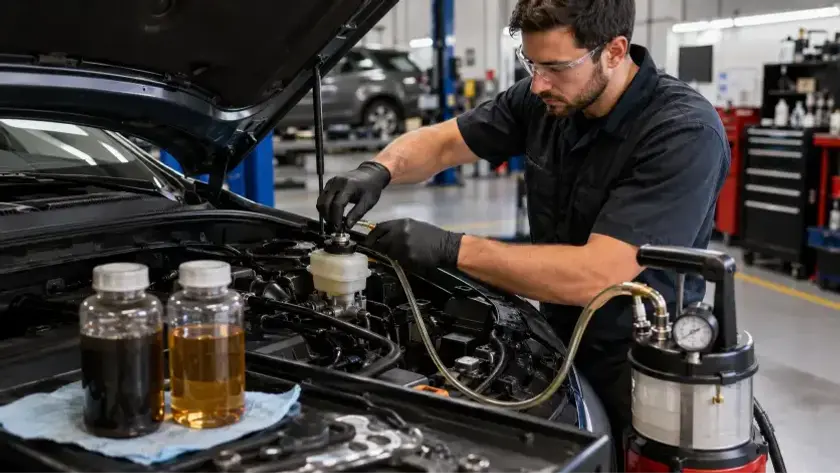
A hydraulic brake fluid flush is a critical preventative safety service that removes old, contaminated oil and trapped air from your car’s stopping system. Over time, brake fluid naturally absorbs moisture from the atmosphere, lowering its boiling point and causing a soft, spongy pedal or internal system rust. Most manufacturers recommend a complete flush every 2 years or 40,000 to 60,000 kilometers. At KMF Automotive in Burnaby, a thorough fluid test and full system flush typically takes between 1 to 2 hours using factory-approved fluids. If your brakes are feeling mushy, contact us or visit our shop floor today for a transparent, honest inspection.
The Hydraulic Lifeline How Brake Fluid Works
When you step on your vehicle’s brake pedal to slow down on a steep hill, you aren’t pulling a simple mechanical link. Instead, your foot is compressing a heavy column of hydraulic fluid inside a closed network of steel lines. This force transfers immediately down to the wheels, forcing your brake calipers to squeeze tight against the spinning rotors.
For this hydraulic system to function flawlessly, the fluid must remain entirely unyielding under pressure. When the fluid is clean and free of atmospheric contamination, it transfers 100% of your foot’s physical energy directly into immediate stopping power.
The Moisture Trap Why Brake Fluid Degrades
Unlike engine oil, which degrades primarily from friction and heat cycles, glycol-based brake fluid suffers from a structural vulnerability: it is hygroscopic. This means it acts like a sponge, naturally drawing in and absorbing moisture straight out of the air.
MEven though your braking system is a sealed loop, microscopic water vapor slowly seeps past flexible rubber hoses, cap threads, and master cylinder seals over time. After two to three years of daily driving, the water level inside your lines rises significantly. When this happens, it dramatically lowers the fluid’s maximum operating boiling point, threatening your safety when you need your brakes most.
The Dangerous Consequences of Water
Contamination
When your brake fluid becomes heavily saturated with water, it sets off a dangerous chain reaction inside your vehicle’s braking system:
Brake Fluid Boiling and Pedal Fade
During heavy braking such as slowing down on a steep highway decline your pads and rotors generate extreme friction temperatures exceeding 200°C. This intense heat transfers directly into your brake calipers. If your fluid contains water, that water will boil and turn into pockets of steam inside your lines. Because gas is compressible, your pedal will suddenly feel completely soft, mushy, and sink straight to the floor, causing severe brake fade.
Internal System Corrosion
Water introduces oxygen directly into your high-pressure steel lines, aluminum pistons, and delicate anti-lock braking system (ABS) valving blocks. This triggers internal rust and chemical corrosion. As internal metal surfaces corrode, tiny flakes of rust flake off into the oil, turning your clean gold fluid into a dark, murky black sludge that can seize up your calipers and ruin expensive ABS control modules.
Critical Signs Your Vehicle Needs a Fluid Flush
While tracking your mileage is the safest way to schedule your maintenance, your vehicle will often display clear physical red flags when the hydraulic loop is failing:
If you pop your hood and look at the small plastic fluid reservoir near the firewall, the oil should look like a clean, semi-transparent light amber gold. If it looks like dark coffee or has visible sediment settling at the bottom, the fluid is deeply contaminated and requires an immediate mechanical flush.
Why Post-Service Suspension Realignment Matters
Performing a comprehensive brake check and full hydraulic overhaul often requires our technicians to raise your vehicle on an automotive lift and remove all four wheels to access the individual caliper bleeder valves. If your vehicle requires a new master cylinder or flexible brake line hoses to resolve an active leak, sections of your front suspension towers or steering linkages must often be carefully maneuvered or unbolted to gain tool clearance.
Because these heavy chassis foundations are disturbed and re-torqued during reassembly, your steering angles will shift slightly out of spec. To protect your mechanical investment, pairing major brake work with a precise computerized wheel alignment in Burnaby is highly recommended. Readjusting your steering linkages eliminates highway drift, maximizes rolling fuel tracking efficiency, and prevents your tires from wearing down prematurely.
Comprehensive Auto Repair Solutions at KMF Automotive
At KMF Automotive, we operate a full-service, independent mechanical workshop equipped to handle your vehicle’s entire maintenance ecosystem. Because a full brake fluid flush requires our licensed technicians to inspect your full stopping system from the pedal to the wheels, it opens up a highly efficient window to address other pending maintenance tasks without paying for overlapping diagnostic visits.
Our shop floor handles everything required to keep your automobile dependable, safe, and efficient. If your vehicle is approaching its next routine service window, we provide factory-approved, premium oil changes using top-tier synthetic lubricants to preserve engine longevity. If your dashboard check engine light is glowing, or if you notice an unusual squealing sound under hard braking, our comprehensive brake repair service in Burnaby will fully restore your stopping confidence.
We provide deep technical expertise across all major automotive platforms and comfort systems. From restoring crisp, icy airflow with an expert air conditioning service in Burnaby to tracking down complex mechanical faults, we handle it all. If your manual gearbox is fighting your inputs up steep hills, our specialized clutch repair service in Burnaby balances your power delivery. Furthermore, for high-mileage engines, booking a preemptive timing belt repair in Burnaby provides absolute insurance against catastrophic internal engine valve damage. We treat your vehicle with the exact level of precision and honesty we would give our own.
Restoring Total Confidence on the Road Ahead
Opting for a professional, preventative brake fluid flush is one of the most cost-effective ways to safeguard your vehicle’s primary safety system. Removing old, water-saturated oil completely eliminates the risk of internal line rust, removes trapped air pockets, and fully restores a firm, highly responsive brake pedal feel. Trusting our experienced team keeps your daily driving completely predictable, secure, and stress-free.
Schedule Your Brake Fluid Inspection in Burnaby Today
Don’t gamble with your vehicle’s stopping power or ignore a soft, mushy pedal. Our certified mechanics at KMF Automotive are fully prepared to test your fluid’s moisture content and execute a flawless system flush with upfront transparency and fair pricing.
Conveniently located at 7080 Macpherson Ave in Burnaby, BC (V5J 4N3) just a brief walk from the Royal Oak SkyTrain Station we have proudly served drivers across the Lower Mainland with exceptional automotive craftsmanship since 1989. Call our friendly local shop today at 604-438-0222 or contact us online to request a transparent price estimate or schedule your service visit.
Frequently Asked Questions: brake fluid flush Burnaby
What is the main difference between a wheel alignment and tire balancing?
A wheel alignment corrects the underlying physical structural angles of your steering links and suspension components so that the tires roll perfectly parallel to each other and track straight. Our professional tire repair service in Burnaby incorporates wheel balancing, which utilizes tiny weights on the rim flange to counteract natural heavy spots within the spinning tire assembly, completely removing high-speed steering wheel vibrations.
Is adding new brake fluid to the reservoir the same as a full flush?
No. Topping up a low reservoir simply mixes clean oil with the old, heavily contaminated fluid already trapped deep inside your lines and calipers. A true professional flush requires connecting a pressurized bleeding machine to push fresh fluid all the way through the entire length of the system, ejecting all old oil and air bubbles out of each individual wheel caliper.
Can I mix different types of brake fluids (like DOT 3 and DOT 5)?
No, never mix them. DOT 3, DOT 4, and DOT 5.1 are glycol-based fluids and can sometimes be substituted depending on manufacturer guidelines, but DOT 5 is a silicone-based fluid. Mixing glycol-based and silicone-based fluids will cause the liquids to chemically react and curdle, turning into a thick jelly that will instantly destroy your master cylinder and block your ABS valves.
How long does a standard brake fluid flush service take to complete?
When performed correctly by a licensed mechanic using professional shop equipment, a complete four-wheel brake fluid test, flush, and system bleed typically takes between 1 to 2 hours. This timeframe includes a comprehensive safety inspection of your vehicle’s pads, rotors, lines, and caliper seals.
Why does my car’s brake pedal feel soft even after changing the pads?
Brake pads are responsible for clamping against the metal rotors to create stopping friction, but they do not control the fluid pressure inside the lines. If your brake pedal still feels soft or spongy after getting brand-new pads installed, it indicates that you either have old, degraded fluid containing boiled moisture or a pocket of atmospheric air trapped inside the hydraulic lines.
Will neglecting my brake fluid flush void my vehicle’s mechanical warranty?
Yes, it can. Most modern vehicle manufacturers explicitly outline hydraulic brake fluid flushes as a mandatory time-and-mileage-based maintenance requirement within your owner’s manual. Failing to document these regular flushes can give warranty providers a valid reason to deny coverage if a major hydraulic component, such as an expensive ABS control pump, fails prematurely due to internal rust or sludge contamination.
Key Takeaways: brake fluid flush Burnaby
- The Hygroscopic Reality: Glycol brake fluid naturally absorbs water vapor from the air, which steadily reduces your vehicle’s safe stopping threshold over time.
- Preventing Brake Fade: Water contamination lowers the boiling point of your fluid, creating dangerous internal steam bubbles that cause a spongy pedal under hard braking.
- Stopping Internal Corrosive Damage: Regular flushes prevent moisture from creating internal rust sludge that can damage expensive ABS valving systems.
- The Odometer Target: Schedule a professional, complete hydraulic fluid flush every 2 years or 40,000 to 60,000 kilometers to ensure optimal vehicle safety.
- Chassis Reassembly Realities: Thorough brake overhauls require unbolting wheels and disturbing chassis areas, making a follow-up computerized alignment highly recommended.
- Honest Independent Craftsmanship: Booking your maintenance with an established local shop ensures access to factory-approved fluids, diagnostic moisture testing, and completely clear pricing.